
October 11, 2026
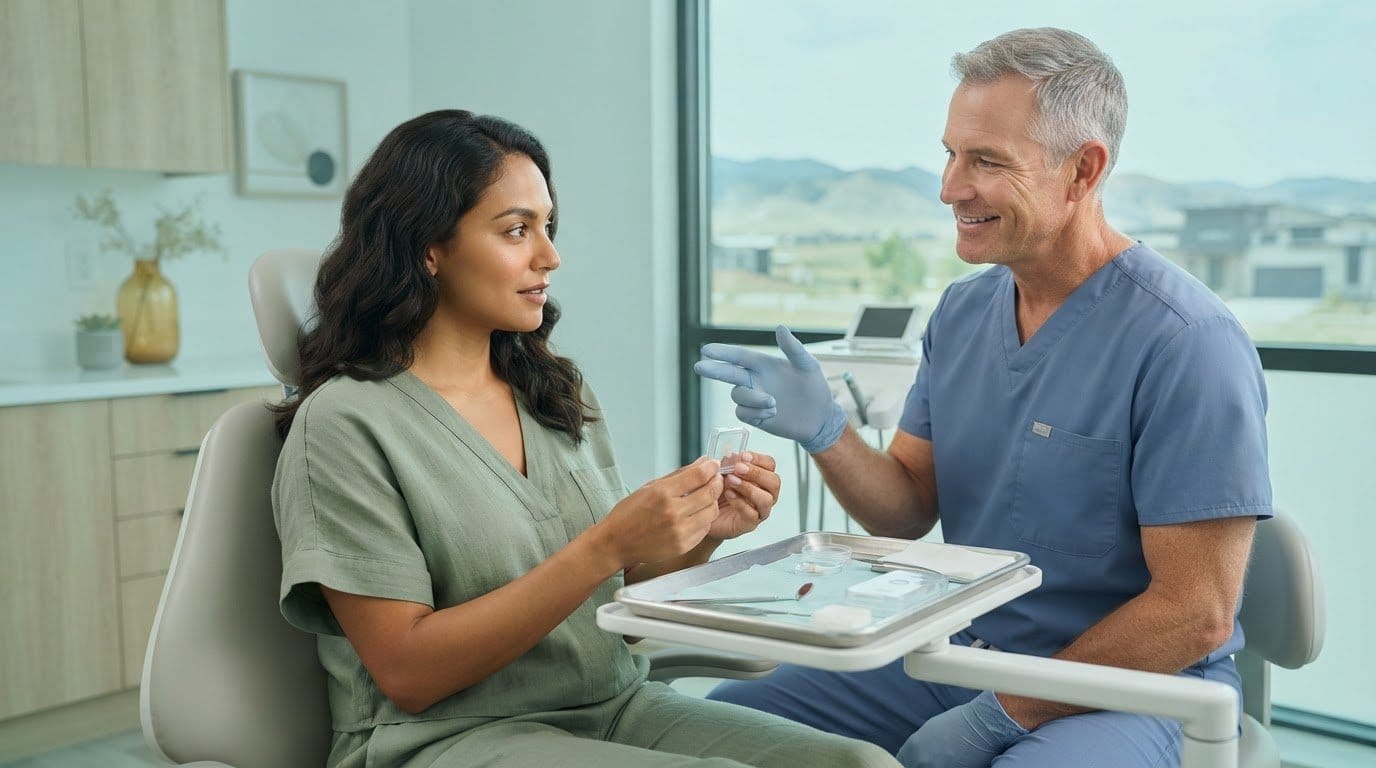
A veneer coming loose can turn an ordinary moment into an urgent question: what to do if a veneer falls off, and whether the tooth underneath is at risk. It’s understandable to worry about sensitivity, damage to the veneer, or whether it can be put back. Start by protecting the exposed tooth, saving the veneer, and avoiding household glue.
Place the veneer in a clean, protective container and arrange a dental assessment. If the tooth feels sensitive, dental wax may provide temporary coverage. Pain, increasing sensitivity, or visible damage to the tooth are reasons to seek prompt attention instead of waiting to see what happens.
A fallen veneer isn’t automatically beyond repair. If it’s intact and the tooth beneath it is healthy, a dentist may be able to clean and rebond it. A chipped veneer or changes to the tooth may call for a different solution. This guide explains how to handle the veneer, protect your tooth, recognize symptoms that need attention, and understand possible next steps for personalized cosmetic dental care.
Key Takeaways
- If you’re unsure what to do if a veneer falls off, keep it safe and arrange a dental assessment rather than trying to fix it yourself.
- A loose veneer may be related to a weakened bond or damage, but an examination is needed to identify what’s happening in your case.
- Whether the veneer is intact or damaged, along with the condition of the underlying tooth, helps guide possible next steps.
- Bring the veneer to your appointment and note when it came off and whether there was a recent impact.
- Personalized cosmetic dental care can help determine the right path forward for a fallen veneer in Highlands Ranch.
What to do immediately when a veneer falls off
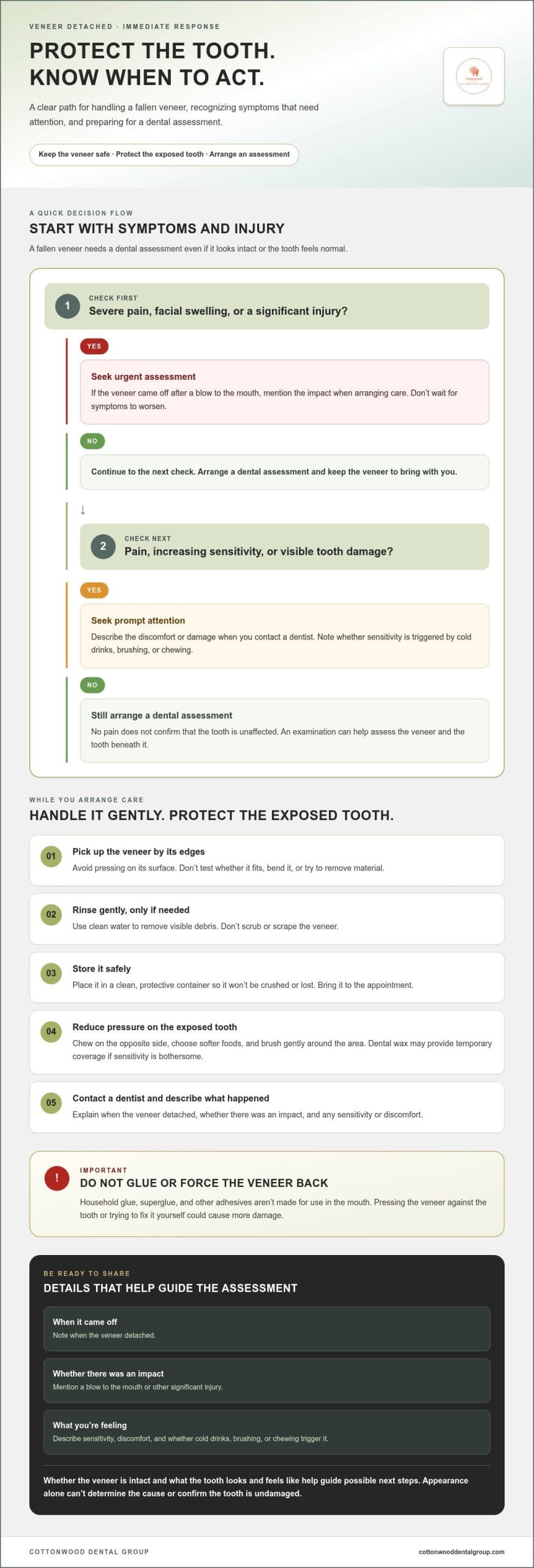
If you’re wondering what to do if a veneer falls off, save the veneer, protect the exposed tooth, and arrange a dental assessment. A detached veneer needs attention, but forcing it back into place could cause more damage. Don’t use household glue, superglue, or other adhesives, which aren’t made for use in the mouth.
- Find the veneer and pick it up carefully. Hold it by the edges and avoid pressing on its surface.
- Rinse it gently if needed. Use clean water to remove visible debris, but don’t scrub, scrape, or bend it.
- Store it safely. Place it in a clean, protective container so it won’t be crushed or lost.
- Protect the exposed tooth. Chew on the opposite side, choose softer foods, and brush gently around the area.
- Contact a dentist promptly. Describe any sensitivity or discomfort, and bring the veneer to your appointment.
Severe pain, facial swelling, or a significant injury needs urgent assessment. If the veneer came off after a blow to the mouth, mention the impact when arranging care. Don’t wait for symptoms to worsen, especially if the tooth becomes increasingly painful or the surrounding area swells.
How to handle and store the detached veneer
Pick up the veneer by its edges rather than gripping its front or back. These thin coverings can be fragile, so don’t test whether they still fit or try to remove material from them. If the veneer looks dirty, rinse it lightly with clean water, then place it in a clean, hard-sided container. Bring it with you to the dental assessment.
How to protect the exposed tooth
The uncovered tooth may feel sensitive to air, temperature, or pressure. Until it’s assessed, avoid chewing on that side and choose softer foods that don’t require forceful biting. Keep the area clean with gentle brushing and careful rinsing. If sensitivity is bothersome, dental wax may provide temporary coverage. Don’t use glue or press the veneer against the tooth.
When you arrange an appointment, explain when the veneer detached, whether there was an impact, and what you’re feeling. Note, for example, whether discomfort occurs with cold drinks, brushing, or chewing. These details help the dental team understand your concern and plan an appropriate evaluation.
A veneer is a thin covering placed over a tooth, as described in this general overview of Veneer (dentistry). Even if the piece appears intact, don’t assume it can be safely reused or that the tooth is undamaged. A dental assessment can guide the next step.
Why veneers come off and what the exposed tooth may feel like
A dental veneer is a thin covering bonded to the front surface of a tooth. It can detach if the bond weakens or if the veneer or underlying tooth is damaged. A loose veneer doesn’t reveal the cause on its own, and the tooth may need attention even if it feels normal. An examination can help distinguish a bonding issue from a problem affecting the tooth beneath it.
Common reasons a dental veneer may loosen
The bond holding a veneer in place may change over time. A direct impact, repeated wear, grinding, or biting down on hard objects can also put stress on the veneer or its bond. Decay or other changes in the underlying tooth may affect how securely the veneer fits. These are possible contributors, not a diagnosis. A dentist needs to examine the tooth and veneer to identify what happened.
The veneer itself may be cracked or chipped, even if the damage isn’t obvious at first glance. In other cases, it may come away intact while the tooth surface appears unchanged. Those differences matter when deciding what care is appropriate, but appearance alone can’t reliably establish the cause or the tooth’s condition. The American Dental Association on Veneers also provides general information about veneers and their care.
What symptoms should you pay attention to?
When a veneer comes off, the tooth may feel different because a surface that was previously covered is now exposed. Sensitivity can occur with cold or hot drinks, air, or pressure while chewing. You might also notice tenderness, a rough edge, or a changed bite where the veneer used to sit.
- Temperature sensitivity: Notice whether hot or cold foods and drinks trigger discomfort.
- Tenderness or pressure: Pay attention to soreness while chewing or when the tooth is touched.
- Roughness or a changed bite: The exposed tooth may feel uneven, or nearby teeth may meet differently when you close your mouth.
No pain doesn’t confirm that the tooth is unaffected. A dentist can check for damage or decay that isn’t easy to see or feel at home. Note what symptoms you have, when they began, and what seems to trigger them. This gives the dental team useful context for a personalized evaluation.
Mild sensitivity is different from severe pain, facial swelling, or symptoms following a significant injury. Those signs call for prompt assessment. For veneer concerns in Highlands Ranch, personalized cosmetic dental care can help determine what’s happening and guide the next steps.
Can a fallen veneer be put back? Comparing likely treatment options
Sometimes a detached veneer can be rebonded, but its appearance alone can’t establish whether that’s appropriate. The dentist needs to assess both the veneer and the tooth beneath it, including whether the veneer is intact, whether it fits properly, and whether the tooth has damage or decay. What to do if a veneer falls off depends on those findings, so don’t assume it must be replaced or can simply be attached again.
| What the dentist finds | Possible next step |
|---|---|
| The veneer is intact and appears suitable for the tooth | Rebonding may be considered after an assessment. |
| The veneer is chipped, cracked, or otherwise damaged | Repair may be considered if appropriate, or replacement may be discussed. |
| The veneer can’t be reused, or the tooth needs additional care | The dentist may discuss a new veneer or another suitable restoration. |
This comparison is a guide, not a diagnosis. A veneer that looks whole may not sit correctly, while a tooth that doesn’t hurt may still need evaluation. Before recommending a path forward, a dentist considers how the veneer fits, its condition, and the health of the underlying tooth. The right option depends on the clinical findings, not appearance alone.
When rebonding may be considered
If the veneer is intact and its fit and the tooth’s condition are suitable, a dentist may consider rebonding it. The dentist evaluates both rather than relying on a visual check at home. Even if the veneer seems to line up, don’t press it into place or try to glue it back. A professional assessment is needed to determine whether rebonding is appropriate.
When repair or replacement may be discussed
A chip or crack can affect whether the veneer is usable, and changes to the tooth may affect its fit. The dentist may consider whether repair is appropriate or whether replacement would better address the findings. If the veneer can’t be reused or the tooth needs treatment, another restoration may be discussed. The recommendation depends on the examination.
Bring the detached veneer to the appointment, even if it appears damaged. It can help the dentist assess its condition and compare it with the tooth. The evaluation may also identify issues that aren’t visible on the veneer itself, such as changes to the underlying tooth. Personalized cosmetic dental care can help determine a next step based on both the veneer’s condition and the tooth’s needs.
How to prepare for a dental appointment after a veneer falls off
Arrange an assessment promptly rather than waiting to see whether sensitivity or discomfort gets worse. Knowing what to do if a veneer falls off also means preparing useful details for the appointment. A clear account of when it detached and what you’ve noticed can help the dentist evaluate the tooth carefully.
What information helps the dentist assess the situation?
Before your visit, make a brief note of when the veneer came off and whether it appeared whole, chipped, or cracked. Mention any recent impact, such as a bump to the mouth, and describe symptoms such as temperature sensitivity, tenderness, swelling, or pain. Include any change in your bite. Bring the veneer in its protective container and tell the dentist about temporary steps you’ve taken.
- When it detached: Note the approximate time and what you were doing.
- How it looks: Describe any visible crack, chip, or change in shape.
- What you feel: Include sensitivity, pain, swelling, tenderness, or a changed bite.
- What you’ve done: Mention how you stored the veneer and any temporary measures used.
You don’t need to determine the cause yourself. Even small details, such as whether discomfort occurs only when chewing or also with a cold drink, can make the conversation more specific. If you’re unsure about a detail, describe what you noticed instead of trying to interpret it.
What may happen during the assessment?
The dentist may visually examine the exposed tooth, the detached veneer, and the surrounding tissues. They may also assess how your teeth meet when you bite. Additional checks or imaging may be considered when clinically appropriate, depending on the examination and the symptoms you describe. The assessment helps clarify whether there’s damage or another concern that needs attention.
Treatment planning depends on the condition of both the veneer and the tooth. After reviewing the findings, the dentist can explain whether rebonding may be suitable, whether repair or replacement should be considered, or whether another restoration may better address the tooth’s needs. The recommendation is based on your individual assessment, so use the appointment to understand the options rather than assume a particular outcome.
Keep your notes and the veneer together before you leave for the appointment. Share any changes in symptoms since arranging care, even if they seem minor. This gives the dental team a fuller picture and supports personalized care for your veneer concern.
Arrange a dental evaluation to have the veneer and exposed tooth assessed as part of personalized cosmetic dental care.
Getting care for a fallen veneer in Highlands Ranch
Once you’ve protected the exposed tooth and saved the veneer, arrange a dental evaluation. An examination can help clarify whether the veneer is suitable for rebonding, needs repair or replacement, or whether the tooth calls for another restoration. You don’t have to decide which option is right on your own.
Cottonwood Dental Group provides porcelain veneer and cosmetic dental care in Highlands Ranch, serving patients from nearby Lone Tree, Centennial, Castle Pines, and Parker as well. A personalized evaluation can consider both the detached veneer and your oral health, so recommendations reflect your individual needs rather than appearance alone.
How a personalized veneer assessment supports the next decision
The dentist can assess whether the veneer is intact and fits appropriately, while also checking the underlying tooth for damage or other concerns. Those findings help shape the next step. Rebonding may be considered if the veneer and tooth are suitable. Repair, replacement, or another restoration may be discussed if they aren’t. The evaluation determines which options are appropriate.
Sharing what happened and what you’ve noticed can make the assessment more useful. Mention whether the veneer came off after an impact, whether it looks chipped, or whether the tooth feels different when you bite. Include any changes in your symptoms since arranging the appointment.
When a veneer concern is part of a larger smile plan
A detached veneer may be the immediate concern, while other cosmetic goals may also be on your mind. Once the tooth has been evaluated, personalized cosmetic care can provide an opportunity to discuss your smile and options that may suit your oral health. You can bring up concerns such as the shape, shade, or alignment of other teeth as part of that conversation.
Address the veneer concern first, then decide whether you’d like to explore a broader smile plan. Cottonwood Dental Group’s cosmetic dental care can support that discussion while keeping the health and condition of the tooth central to the recommendation.
Schedule a veneer evaluation with Cottonwood Dental Group to have the veneer and underlying tooth assessed and discuss appropriate next steps.
Take the next step toward a confident smile
A veneer coming off can feel unsettling, especially when you’re unsure what the tooth needs. A dental evaluation can replace guesswork with a clearer understanding of your options and help you feel prepared to move forward.
If you’re still asking what to do if a veneer falls off, let the condition of the veneer and tooth guide the next step, with professional advice tailored to your needs. Cottonwood Dental Group offers porcelain veneers and personalized cosmetic and general dental care in Highlands Ranch, Colorado. You can discuss the concern alongside your smile goals and oral health.
Schedule a veneer evaluation with Cottonwood Dental Group to take the next step. A thoughtful assessment can help you move forward with greater clarity.
Frequently Asked Questions
What should I do first if my veneer falls off?
Stay calm, pick up the veneer carefully, and place it in a clean container. If you’re wondering what to do if a veneer falls off, don’t force it back onto the tooth or use household glue. Chew on the other side and keep the area clean while arranging a dental assessment. Severe pain, swelling, or an injury calls for prompt attention rather than waiting for a routine appointment.
Can I glue a veneer back on myself?
No. Household glue and over-the-counter adhesives aren’t made to attach dental veneers, and they may irritate mouth tissues or complicate professional care. Even if the veneer seems to line up, don’t press it into place. Keep it in a container and bring it to your dentist. The dentist can examine its condition and the exposed tooth before deciding whether rebonding is suitable.
Is a veneer falling off a dental emergency?
A detached veneer needs dental attention, but urgency depends on symptoms and whether the tooth was injured. Arrange an assessment promptly, particularly if the exposed tooth is sensitive or your bite feels different. Severe pain, swelling, or a significant injury warrants urgent dental attention. This guidance applies whether you’re in Highlands Ranch, Lone Tree, Centennial, Castle Pines, or Parker. No pain doesn’t prove the tooth is unharmed.
Can a dentist put a fallen veneer back on?
Sometimes, if the veneer is intact, fits appropriately, and the underlying tooth is suitable. A dentist must examine both before recommending rebonding. If the veneer is cracked or the tooth has changed, repair, replacement, or another restoration may be considered instead. Keep the veneer even if it looks damaged so the dentist can assess it directly. The examination, not a home inspection, determines which option may be appropriate.
What should I eat after a veneer falls off?
Choose softer foods and chew on the opposite side until the tooth has been assessed. For example, cut food into smaller pieces and avoid biting directly into firm foods with the exposed tooth. Hard or sticky foods may cause discomfort or put unwanted pressure on the area. Brush gently to keep it clean. If eating brings on significant pain, pause and contact the dental practice for guidance.
Will my tooth hurt after a veneer comes off?
It may feel sensitive or tender, though symptoms vary. If cold drinks or hot foods trigger discomfort, avoid those temperatures until you’ve had an assessment. Notice whether the feeling is brief or lingers, and share that detail with the dentist. Severe or worsening pain, swelling, or signs of injury call for prompt attention. An examination can identify concerns that aren’t obvious from symptoms alone.
How should I store a veneer that fell off?
Hold it gently by the edges, avoiding bending or scraping it. If visibly dirty, rinse it lightly with clean water, then place it in a clean protective container. Don’t scrub it or wrap it in tissue, where it could be misplaced or thrown away. Bring the stored veneer to the appointment so the dentist can examine its condition alongside the tooth.
