
August 26, 2026

Imagine you’re finishing your evening routine when a sharp, stinging sensation stops you mid-floss. You look in the mirror and notice a localized, puffy area where your gums meet your teeth. If you’ve experienced this, you aren’t alone. The swelling of gums in between teeth is a common concern that affects millions of adults, often serving as a “check engine light” for your oral health. While it’s easy to feel anxious about redness or sudden bleeding, understanding the root cause is the first step toward reclaiming your comfort.
It’s frustrating when your smile feels sensitive or looks inflamed, especially when you’re diligent about your hygiene. You deserve a clear path to relief and the peace of mind that comes with expert guidance. In this guide, we’ll identify exactly why your gums are reacting this way and share the most effective methods for immediate relief. From simple home care adjustments to recognizing when a visit to our Highlands Ranch boutique practice is necessary, you’ll gain a comprehensive plan to restore your healthy, confident smile.
Key Takeaways
- Discover why the interdental papilla is the first area to show signs of inflammation and how you can protect this delicate tissue.
- Learn to identify the difference between simple food impaction and the more serious swelling of gums in between teeth caused by localized infections.
- Master gentle home care techniques, including the saltwater rinse, to reduce pressure and discomfort in your gums immediately.
- Recognize when symptoms like throbbing pain or pus signal that a professional visit is necessary for your long-term health.
- Explore how modern, minimally invasive solutions like laser gum treatment can promote healing while prioritizing your comfort.
Understanding Swelling of Gums in Between Teeth
Have you ever noticed a tiny, puffy triangle of tissue between your molars? That specific area is known as the interdental papilla. It’s the small wedge of gum tissue that fills the gap between your teeth, acting as a crucial barrier for your underlying bone and tooth roots. The swelling of gums in between teeth is a localized inflammatory response to bacteria or trauma. Because this tissue is delicate and tucked away, it’s often the very first place in your mouth to signal that something is wrong.
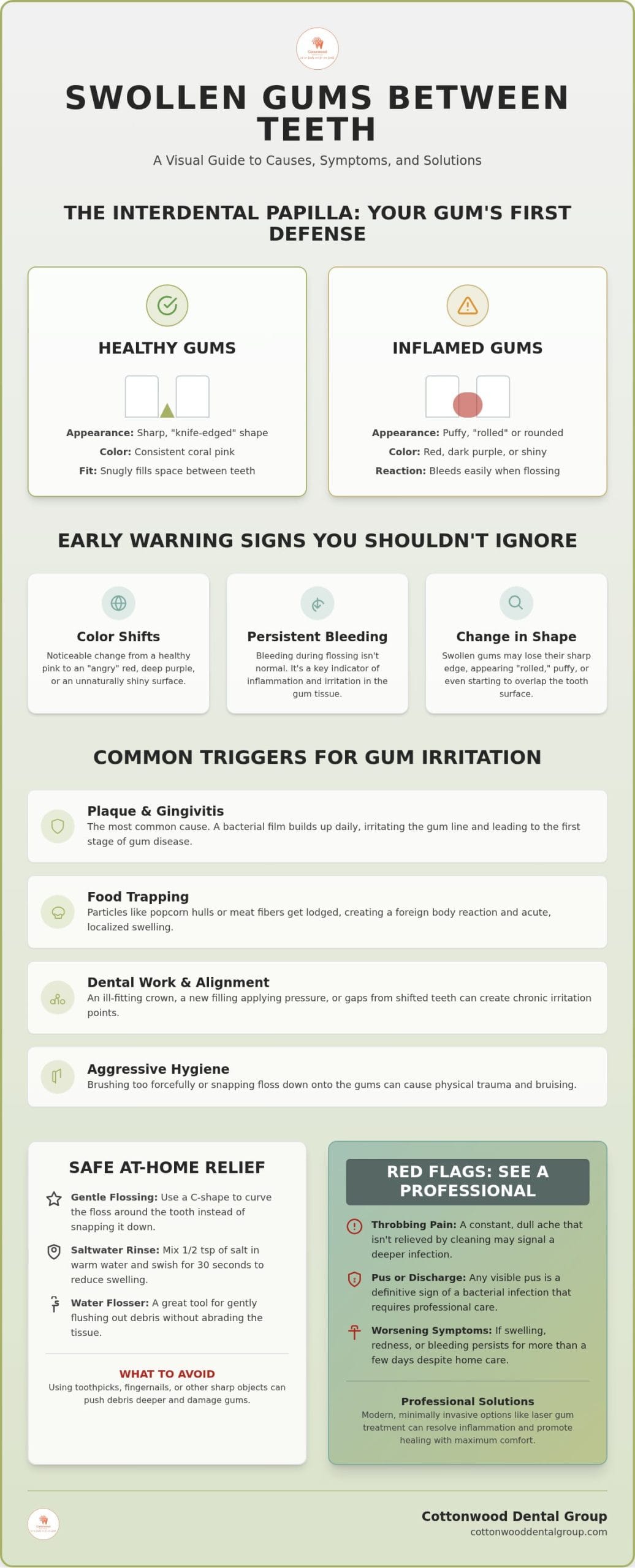
When this area is healthy, it fits snugly against the teeth with a sharp, “knife-edged” appearance. However, when irritation occurs, those margins become “rolled” or rounded. This change in shape isn’t just an aesthetic issue; it’s a sign that the body is sending extra blood and immune cells to the area to fight off a perceived threat. Identifying these shifts early is the best way to maintain a comfortable, healthy smile.
The Role of the Interdental Papilla
Think of your interdental papilla as a biological seal. When your oral hygiene is on point, this seal remains tight, preventing food particles and bacteria from reaching the deeper structures of your jaw. However, this area is more sensitive than the rest of your gumline because it’s thinner and highly vascularized. If plaque is allowed to sit along the gumline, it breaches that seal. This often leads to Gingivitis, an early stage of gum disease that causes the tissue to pull away slightly from the tooth, creating a pocket where more bacteria can thrive.
Signs Your Swelling Needs Attention
Identifying the swelling of gums in between teeth early can prevent more invasive procedures later. You should look for these specific indicators:
- Color Shifts: Healthy gums are a consistent coral pink. If the wedge between your teeth looks “angry” red, dark purple, or shiny, inflammation is present.
- Persistent Bleeding: While some believe bleeding is a normal part of flossing, it’s actually a cry for help from your tissues.
- Overlapping Tissue: In more advanced cases, the swollen papilla may actually begin to overlap the surface of the tooth, making it difficult to keep the area clean.
Monitoring these changes is vital for your long-term health. If the puffiness doesn’t resolve within a few days of careful cleaning, it may be time for a professional evaluation to ensure a simple irritation hasn’t evolved into a deeper infection. Our team in Highlands Ranch is here to help you understand these signals and provide the gentle care you need.
Common Triggers for Irritated Gums
Why do gums suddenly flare up in specific spots? It’s often a combination of environmental factors and biological shifts. While plaque is the most frequent culprit, creating a biofilm every 24 hours that must be disrupted, other elements can cause acute swelling. For instance, hormonal fluctuations during pregnancy or monthly cycles can increase blood flow to the tissues, making them more reactive to even small amounts of bacteria. This localized sensitivity is part of the broader symptoms and causes of gingivitis, where the body’s defense system overreacts to irritants.
Food Trapping and Foreign Body Reactions
Have you ever felt a dull ache after eating popcorn or steak? These foods are notorious for leaving behind hulls or fibrous strands that act as foreign bodies. When these particles get wedged deep into the papilla, they trigger an immediate inflammatory response as your body tries to expel the intruder. This often leads to the sudden swelling of gums in between teeth. It’s tempting to reach for a toothpick or even a fingernail, but using non-dental tools can push the debris deeper or lacerate the tissue. Gentle flossing or a water flosser is a much safer approach to clearing the area without causing further harm.
Dental Work and Localized Irritation
Sometimes, the irritation comes from the very things meant to protect your smile. An older or ill-fitting dental crown can develop a tiny ledge that traps bacteria, leading to chronic puffiness in that specific spot. Similarly, if teeth have shifted due to age or missing neighbors, the gaps may become “food traps” that are significantly harder to clean. New fillings can also occasionally feel tight, putting physical pressure on the interdental tissue until the bite is perfectly adjusted.
We also see patients who are perhaps a bit too dedicated to their hygiene. Aggressive brushing or a “floss snap”, where the floss slams into the gum rather than sliding gently, can cause physical bruising and swelling. If you’re noticing persistent irritation despite your best efforts, it’s worth having a professional look at your technique. Our team at Cottonwood Dental Group can help you refine your home care routine to ensure you’re protecting your gums rather than punishing them.
Is it Gingivitis or a Localized Infection?
Distinguishing between a minor irritation and a serious infection is vital for your long-term health. While a temporary irritant like the food debris mentioned earlier often resolves with gentle care, persistent swelling usually points to a more deep-seated issue. It’s helpful to view swelling of gums in between teeth as a diagnostic signal. Is the inflammation widespread, suggesting systemic gingivitis, or is it a concentrated pocket of infection? Identifying the difference early can be the factor that saves a tooth from future loss.
In rare but severe cases, swelling may be accompanied by a “punched-out” appearance of the papilla, a foul taste, and significant pain. This could indicate Acute Necrotizing Ulcerative Gingivitis (ANUG), historically known as “trench mouth.” While uncommon, this condition requires immediate professional intervention to stop rapid tissue destruction. Most often, however, the issue is a progression of more common oral health challenges.
The Progression from Gingivitis to Periodontitis
When gingivitis is left unchecked, it doesn’t just stay on the surface. The chronic inflammation causes the gum tissue to pull away from the tooth, creating “pockets.” These pockets become hidden breeding grounds for anaerobic bacteria. Over time, soft plaque hardens into tartar, also known as calculus. This substance is incredibly porous and acts like a permanent anchor for bacteria under the gumline. You can’t brush or floss tartar away at home; it requires professional scaling. This cycle is why localized swelling of gums in between teeth is often a precursor to periodontitis, a stage where the infection begins to attack the supporting bone structure.
When Swelling Indicates an Abscess
Does the swelling look like a distinct, pimple-like bump on the gum? This is often called a parulis, or a “gum boil,” and it’s a primary indicator of a dental abscess. There are two main types to consider:
- Periodontal Abscess: This originates in a deep gum pocket, often caused by trapped bacteria or a foreign object.
- Periapical Abscess: This starts at the tip of the tooth’s root, usually due to an untreated cavity or trauma that has infected the dental pulp.
If you experience throbbing pain, fever, or notice pus, the situation has become a dental emergency. An untreated abscess won’t go away on its own. It can spread to the jawbone or enter the bloodstream, leading to serious systemic health complications. Seeking a professional diagnosis at our Highlands Ranch practice ensures we can identify the source of the infection and provide the precise treatment needed to restore your health.
Safe Home Care and Relief Strategies
When you first notice the swelling of gums in between teeth, your primary goal is to reduce inflammation without causing further irritation. The gold standard for this is a simple warm saltwater rinse. By dissolving about half a teaspoon of salt in eight ounces of warm water, you create a solution that reduces osmotic pressure. This naturally draws excess fluid out of the swollen tissue, providing almost immediate, albeit temporary, relief. While you might be tempted to use hydrogen peroxide or alcohol-based mouthwashes, these can be far too harsh for compromised tissue. They often dry out the area and can actually delay the healing process.
For immediate pain management, over-the-counter anti-inflammatory options can help manage the discomfort. You can find specialized oral gels for approximately $5 to $15 at local retailers like Walgreens or Target, which can provide a numbing effect. However, these are surface-level fixes. To truly address the issue, you must keep the area clean. Instead of “snapping” traditional floss into the sensitive gap, switch to a water flosser or soft-picks. These tools allow you to clear away debris and bacteria with much less physical trauma to the interdental papilla.
The 48-Hour Observation Window
It’s vital to monitor how your body responds to home care. During the first 48 hours, focus on gentle clearing and rinsing after every meal. If the redness begins to spread or if you develop a fever, the issue may have progressed beyond a simple irritation. Watch for the appearance of pus or a persistent, throbbing ache that keeps you awake at night. These are signs that the body is struggling to fight off the infection on its own and requires professional intervention.
Optimizing Your Daily Routine
Long-term relief depends on your technique. Many people brush with too much force, believing they’re getting a deeper clean, but this often leads to more inflammation. Switch to a soft-bristled electric toothbrush and let the vibrations do the work. Focus on the angle of the bristles, ensuring they gently massage the gumline rather than scrubbing it. If the swelling of gums in between teeth persists past 72 hours despite these adjustments, it’s time for an expert opinion. Contact our Highlands Ranch office today to ensure your localized irritation doesn’t turn into a larger health concern.
Professional Treatment at Cottonwood Dental Group
At Cottonwood Dental Group, we understand that finding swelling of gums in between teeth can be unsettling. Our Highlands Ranch practice is designed to provide a concierge experience that prioritizes your comfort while delivering the highest standard of clinical excellence. For residents in nearby Lone Tree and Centennial, we offer a sophisticated yet welcoming environment where your oral health is managed with precision and care. We don’t just treat symptoms; we look for the root cause of your discomfort to ensure your smile remains healthy for a lifetime. If you’re tired of feeling like just another chart number, discover how Cottonwood Dental’s premium concierge dentistry in Highlands Ranch delivers a truly personalized partnership for your oral health.
By identifying the exact source of the swelling of gums in between teeth, we can apply the most conservative treatment possible. Whether your inflammation is caused by localized trauma or early-stage gum disease, our team provides personalized care plans tailored to your unique needs. We believe in a “benefit-first” approach, where we focus on the relief and long-term wellness you’ll experience through our modern methodologies.
Minimally Invasive Periodontal Care
Modern dental lasers have revolutionized how we handle gum inflammation. Unlike traditional methods that might require more invasive techniques, laser gum treatment allows us to target and remove bacteria and infected tissue with incredible accuracy. The laser energy specifically interacts with the compromised areas while sparing the healthy surrounding gums. This level of precision means you’ll experience significantly less discomfort during the procedure. Additionally, the laser promotes faster healing times by stimulating the body’s natural regenerative processes. Choosing early intervention with these advanced tools often saves you from more complex and costly surgeries in the future. If you’re wondering how to manage the cosmetic dentistry cost Highlands Ranch patients encounter for these advanced treatments, our team can walk you through your coverage and financing options.
The Cottonwood Patient Experience
If the thought of a dental visit causes you worry, you’re not alone. We specialize in sedation dentistry to ensure that even the most anxious patients feel completely at ease. From the moment you walk into our boutique practice, you’ll notice a difference in our pace and personal touch. During your first consultation for gum swelling, we’ll perform a thorough examination using high-definition imaging to see exactly what’s happening beneath the gumline. We take the time to explain our findings in plain language, acting as your trusted expert guide through every step of your treatment. Our commitment to excellence ensures that you receive a high-end, personalized solution in a setting that feels like home.
Schedule your consultation at Cottonwood Dental Group today.
Reclaiming Your Healthy Smile
Addressing localized inflammation is about more than just comfort; it’s about protecting the foundation of your smile. We’ve explored how simple factors like food impaction or aggressive flossing can trigger the swelling of gums in between teeth, and how targeted home care can often provide the relief you need. However, when puffiness lingers past a few days, it’s a clear signal that your body needs a more precise, professional approach to clear away stubborn bacteria and prevent deeper bone loss.
Led by Dr. Parsons, a trusted Highlands Ranch expert, our practice is dedicated to providing concierge-level service that puts your well-being first. We utilize advanced laser technology to offer painless gum treatments that promote rapid healing, ensuring you don’t have to choose between clinical excellence and physical comfort. You deserve a smile that feels as good as it looks. Experience gentle, expert care for your gums at Cottonwood Dental Group; schedule your visit today! We look forward to helping you return to a life of total oral health and confidence.
Frequently Asked Questions
What causes swelling of gums in between teeth after eating?
Swelling after a meal is usually caused by food impaction, where debris like popcorn hulls or meat fibers get wedged into the interdental papilla. This triggers an immediate inflammatory response as your body tries to protect the area. If you notice swelling of gums in between teeth specifically after eating, it’s often a “foreign body” reaction. Gentle flossing or using a water flosser usually resolves the issue quickly by clearing the trapped irritant.
Why is my gum swollen behind my back tooth if I don’t have wisdom teeth?
Even without wisdom teeth, you can experience swelling behind your last molar due to a condition called pericoronitis or localized trauma from chewing. Sometimes a small flap of gum tissue remains, which easily traps bacteria and plaque. This area is also prone to “cheek biting” or irritation from hard foods. If the puffiness is accompanied by a bad taste or difficulty opening your mouth, it may indicate a localized infection that needs professional attention.
Can I pop a swollen gum bump myself?
You should never attempt to pop or drain a gum bump yourself. Doing so can push bacteria deeper into your tissues or jawbone, potentially leading to a much more severe infection or even sepsis. A bump, often called a parulis, is usually a sign of an underlying abscess. It requires a professional diagnosis to determine if the source is a gum pocket or a tooth root issue, ensuring the infection is safely and thoroughly resolved.
How long does it take for swollen gums to go down?
Minor irritation from food or flossing trauma typically begins to subside within 48 to 72 hours with proper home care. Using warm saltwater rinses and gentle cleaning helps speed up this process. However, if the swelling of gums in between teeth persists beyond three days, it often indicates a more complex issue like tartar buildup or a localized infection. In these cases, the inflammation won’t fully resolve until a professional removes the underlying cause.
Is gum swelling a sign of a dental emergency?
Gum swelling becomes a dental emergency if it’s accompanied by throbbing pain, fever, or visible pus. These symptoms suggest an abscess that could spread to other parts of your body. If you notice swelling that makes it difficult to breathe or swallow, seek immediate care. While minor puffiness can often wait a day or two, systemic signs of infection require an urgent evaluation to protect your overall health and prevent bone loss.
Can stress cause my gums to swell in specific spots?
Stress indirectly contributes to gum inflammation by increasing cortisol levels, which can weaken your immune system’s ability to fight off bacteria. High stress also leads to habits like teeth grinding or clenching, which places physical strain on the supporting tissues. This pressure can cause localized swelling in specific areas that are already under stress. Maintaining a consistent hygiene routine is especially important during busy periods to help your body manage these physiological shifts.
What is the best mouthwash for swollen gums?
The best mouthwash for active swelling is an alcohol-free, therapeutic rinse containing antiseptic ingredients like cetylpyridinium chloride (CPC) or essential oils. Alcohol-based washes can dry out and irritate already sensitive tissues, making the problem worse. For a natural alternative, a warm saltwater rinse remains a highly effective, gentle option. You can find quality therapeutic rinses at retailers like Target or Walgreens, with prices typically ranging from $3 to $16 depending on the brand and size.
