
October 7, 2026

What if the best way to improve smile aesthetics isn’t a dramatic change, but the right treatment for one detail you’d like to address? A brighter shade, a small gap, chipped edges, or a missing tooth can each call for a different approach. It’s understandable to wonder which option fits your concern, how permanent it may be, and whether the result will still look natural.
The right plan starts with your goals and oral health. Teeth whitening may suit concerns about tooth shade, while clear tray orthodontics can address selected alignment issues. Porcelain veneers, crowns, dental implants, and cosmetic dentures may be considered for other changes, depending on your needs. A dentist can explain what each option addresses, its limitations, and the care involved so you can make an informed choice.
In this guide, you’ll learn how common cosmetic and restorative treatments differ, what factors shape a personalized plan, and which questions can help you prepare for a conversation with your dentist. At Cottonwood Dental Group in Highlands Ranch, smile enhancement starts with your priorities and considers both appearance and dental health.
Key Takeaways
- Smile aesthetics includes the appearance of your teeth and gums, but differences don’t automatically need treatment.
- Match your concern to an option: whitening, veneers, clear tray orthodontics, or restorative treatments each serve different purposes.
- Compare treatments by the concern they address, the degree of change involved, and the planning considerations that matter to your dental health.
- To prepare for a consultation, describe what you’d like to change, prioritize your goals, and review your health history with your dentist.
- A personalized plan can help you improve smile aesthetics in a way that reflects your goals and oral health.
What Does It Mean to Improve Smile Aesthetics?
Smile aesthetics describes how your teeth and gums look together and how they relate to your facial features. Tooth color, shape, spacing, alignment, and the amount of gum visible when you smile can all influence your overall impression. If one detail draws your attention, it’s reasonable to explore options, but a difference in appearance doesn’t automatically mean something is unhealthy or needs treatment.
There’s no single smile standard that defines attractiveness. Your preferences, facial features, dental history, and oral health all help shape what feels right for you. Cosmetic dentistry generally focuses on appearance, while restorative care addresses concerns such as damaged or missing teeth. Some treatments can serve both purposes. For a broader introduction, see this Cosmetic Dentistry Overview.
Cosmetic goals describe the changes you’d like to see; functional or restorative needs address the health, strength, or replacement of teeth. These goals can overlap. Knowing which matters most to you helps make a plan to improve smile aesthetics more focused.
Which Smile Details Do People Commonly Want to Change?
People may want to discuss tooth color, spaces between teeth, chips, uneven edges, or differences in tooth shape. Alignment and how much gum shows when smiling can also affect how someone feels about their appearance. These concerns are personal: one person may like a small gap, while another may want to explore ways to change it. Start by identifying the detail you’d like to address, rather than measuring your smile against a universal ideal.
Why Oral Health Comes Before Cosmetic Changes
Before discussing elective aesthetic procedures, a dentist evaluates your teeth and gums and considers your dental health. Decay, gum concerns, or damaged teeth can affect which options are appropriate and how care should be planned. An examination helps identify relevant needs and explain possible next steps. Starting with health means the conversation accounts for more than appearance alone.
For a useful starting point, describe what you notice in your own words. You might say you’d like your front teeth to look more even, or that you’re concerned about a darkened tooth. Clear priorities make the conversation specific while leaving room to consider your oral health and preferences together.
Which Treatments Can Improve Smile Aesthetics?
The right option depends on what you’d like to change. Some treatments focus on a visible detail, such as tooth color, while others address alignment or replace a missing tooth. A dentist considers your oral health and the condition of your teeth and gums before recommending a path. This helps focus the discussion on options that suit both your priorities and dental needs.
Options for Tooth Color, Shape, and Minor Imperfections
Professional teeth whitening focuses on tooth color. It may be worth discussing if shade is your main concern, but whitening doesn’t change tooth shape, spacing, or alignment. Porcelain veneers may address selected concerns involving the appearance of teeth, such as differences in shape or visible imperfections. A dentist can assess whether veneers fit your goals and explain what treatment involves.
Dental crowns cover a tooth and may also affect its visible appearance. They’re considered in light of the tooth’s condition, rather than as a cosmetic alternative for every surface-level concern. The distinction matters: a treatment that changes how a tooth looks may also serve a restorative purpose, so planning should account for both.
Options for Alignment, Missing Teeth, and Denture Appearance
Clear tray orthodontics may be considered for selected alignment concerns. Because it focuses on tooth position, it serves a different purpose from whitening or veneers. An individual assessment helps determine whether this approach fits your alignment needs and dental health.
For a missing tooth, dental implants may be part of a replacement plan. Cosmetic dentures may also be discussed when replacing teeth and improving the appearance of a denture are priorities. Which option makes sense depends on your needs and the condition of your mouth; neither is a universal solution.
Treatment choice depends on the concern you want to address, the condition of your teeth and gums, and the kind of change that fits your goals. If you’re exploring ways to improve smile aesthetics, compare options by their purpose and scope, not by appearance alone. A treatment conversation can clarify what each approach may address, what it won’t change, and how oral health shapes the plan. Cottonwood Dental Group provides personalized cosmetic and general dental care in Highlands Ranch. Learn more about personalized cosmetic dental care.
How Do You Compare Smile Enhancement Options?
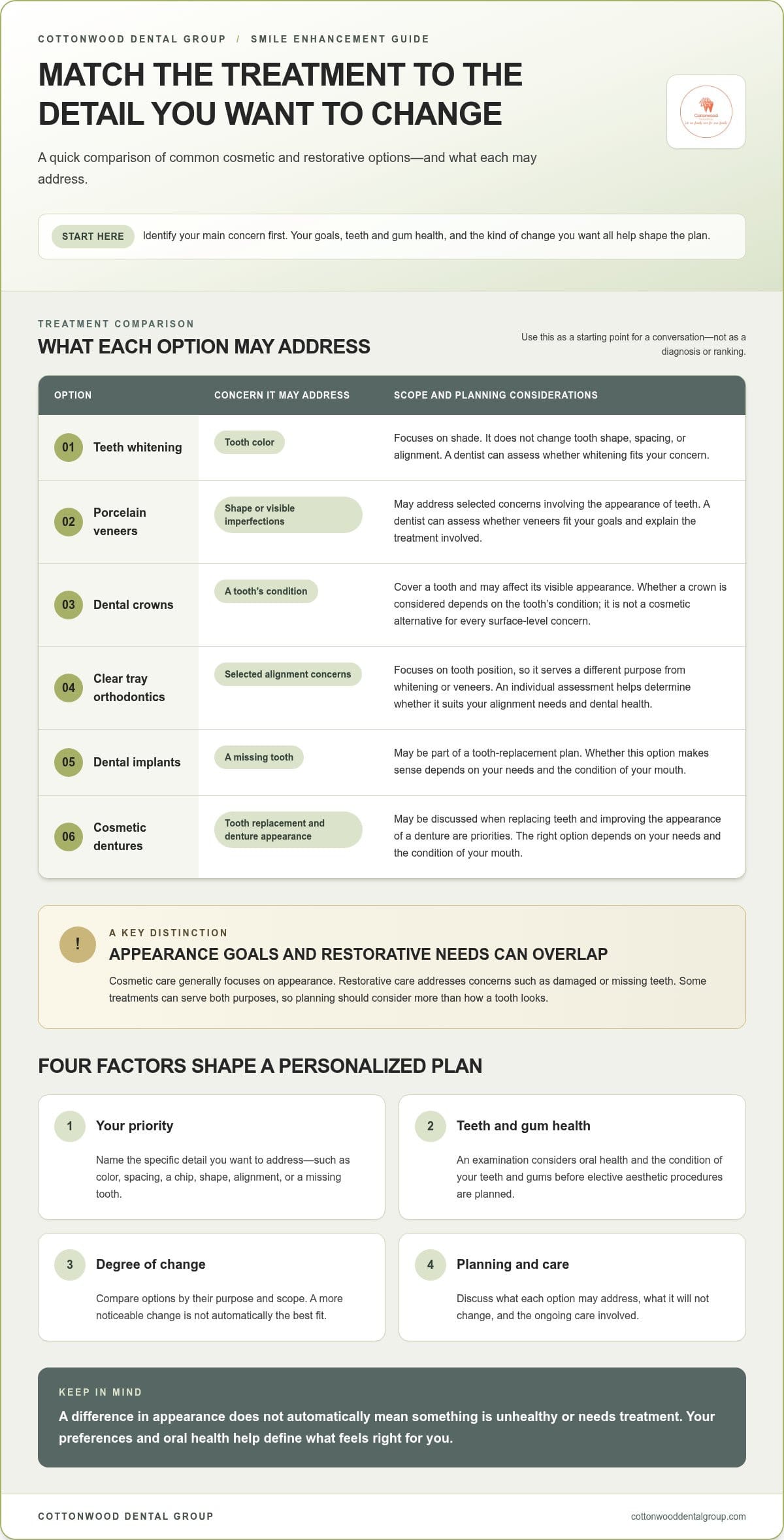
A useful comparison starts with your concern, not with how dramatic a treatment may look. A noticeable change isn’t automatically the best choice. The right option should address your priority while taking your dental health, desired degree of change, and ongoing care into account. Use the table as a starting point for discussion, not as a diagnosis or ranking.
| Option | Concern it may address | General scope and planning considerations |
|---|---|---|
| Teeth whitening | Tooth color | Focuses on shade rather than shape or alignment. A dentist can assess whether whitening aligns with your goals and dental health. |
| Porcelain veneers | Selected concerns with tooth appearance | Can change the visible appearance of treated teeth. Discuss the planned changes and how they fit your existing teeth. |
| Clear tray orthodontics | Selected alignment concerns | Focuses on tooth position. Suitability and planning depend on your alignment and individual dental needs. |
| Restorative options | Damaged or missing teeth, or denture needs | Crowns, implants, or cosmetic dentures may support function as well as appearance. The condition of your teeth and gums helps shape the plan. |
What Should You Weigh Before Choosing a Treatment?
Start by naming your main concern and how much change you hope to see. Then consider your dental health, personal priorities, and the care involved after treatment. If tooth shade is the priority, alignment-focused care won’t address it. If a tooth is damaged, appearance may be only one part of the decision. Treatment longevity and maintenance vary by procedure and individual habits, so ask what ongoing care may involve rather than relying on a fixed expectation.
When Might a Restorative Option Also Change Appearance?
A crown may restore a damaged tooth and affect how it looks. An implant or denture may replace missing teeth, supporting function while also changing the appearance of your smile. These options differ from treatments chosen mainly to alter appearance because they address a restorative need as well. Your dentist considers function and oral health alongside aesthetics when weighing the possibilities.
There isn’t one best choice for everyone. Suitability, expected outcomes, and care recommendations depend on individual circumstances, so use a comparison to prepare questions, not as a substitute for an assessment. To improve smile aesthetics thoughtfully, focus on the concern you want addressed and discuss how each option’s scope fits your health and preferences.
How Can You Prepare for a Smile Enhancement Consultation?
A little preparation can make it easier to explain what you hope to change and understand the options. Note the details that catch your attention, then decide which matters most. Bring relevant health history, including medications, past dental treatment, and concerns about your teeth or gums. Your dentist can use this context to discuss options and how your oral health may affect the order of care.
How to Describe the Smile Changes You Want
Use your own words and point to specific details: tooth color, spacing, shape, uneven edges, alignment, or a missing tooth. If photographs help explain a preference, bring them as conversation aids, not as a promise of an identical result. Trends and other people’s smiles can inspire ideas, but your goals should reflect what feels right for you. For more background, read this cosmetic dentist guide for Highlands Ranch.
Questions That Make Treatment Planning Clearer
Once you’ve shared your priorities, ask questions that clarify the possibilities and trade-offs. For example:
- Which options may address the concern I’ve described, and why might one be considered over another?
- What does each option involve, and what are its limitations?
- What aftercare or ongoing maintenance should I expect?
- Does any dental health concern need attention before aesthetic treatment, and could that affect the sequence?
If alignment is a priority, explore the clear tray orthodontics guide to help prepare questions about that approach.
These conversations help you understand possible care without assuming every option is suitable. Recommendations, expected outcomes, and maintenance guidance depend on your dental needs and examination. Ask how a proposed plan supports your priorities while accounting for your oral health.
Ready to discuss your goals in a personalized setting? Schedule a smile enhancement conversation with Cottonwood Dental Group in Highlands Ranch to explore ways to improve smile aesthetics around your needs.
Explore Personalized Ways to Improve Smile Aesthetics in Highlands Ranch
A smile plan should begin with what you’d like to change and what supports your dental health. A brighter appearance, a change in tooth shape, improved alignment, or replacement of a missing tooth can each call for a different conversation. The aim isn’t to pursue every available treatment, but to understand which possibilities may suit your goals and dental needs.
What Personalized Smile Planning Can Include
At Cottonwood Dental Group, a concierge cosmetic and general dental practice in Highlands Ranch, planning centers on your priorities, oral health, and the treatment possibilities relevant to your situation. You might discuss whether teeth whitening could address a concern about color, whether porcelain veneers fit a particular appearance goal, or whether clear tray orthodontics may suit an alignment concern. If a tooth is damaged or missing, restorative care may also be part of the conversation.
These options aren’t interchangeable, and a list of treatments isn’t a recommendation for every patient. Your dentist considers your dental health and the changes you hope to see before discussing next steps. This personalized approach helps set grounded expectations and makes room for questions about the scope, care, and limitations of each option. A suitable plan may focus on one priority or consider restorative and cosmetic needs together.
Taking a Comfortable Next Step Locally
If you’re in Highlands Ranch, Lone Tree, Centennial, Castle Pines, or Parker, take time to consider what matters most to you. Bring your questions, describe the details you’d like to change in your own words, and share any concerns about treatment or maintenance. A thoughtful discussion can clarify possibilities without requiring you to choose a treatment before understanding your options.
Whether you’re considering a subtle change or have questions about a restorative concern, the conversation can start with your goals and dental health. To learn more about Cottonwood Dental Group’s personalized approach, explore personalized cosmetic dental care.
Take the Next Step Toward a Smile That Feels Like You
The best way to improve smile aesthetics is to connect the details you want to change with a plan that also respects your oral health. Whitening, veneers, clear tray orthodontics, and restorative treatments address different needs, so the most visible option isn’t automatically the right one. A careful conversation can help clarify your priorities, compare possibilities, and understand the care each option may involve.
You don’t need every answer before starting. Bring your questions and describe what you’d like to change in your own words. At Cottonwood Dental Group, concierge, personalized care brings cosmetic and general dentistry together in Highlands Ranch, with recommendations shaped around each patient’s goals and dental health.
When you’re ready to explore your options, explore personalized cosmetic dental care at Cottonwood Dental Group. Start a conversation about your goals and the options that may fit your needs.
Frequently Asked Questions
How can I improve the appearance of my smile?
You can improve smile aesthetics by matching treatment to the detail you want to change and considering your oral health. Professional teeth whitening focuses on tooth color, while porcelain veneers may address selected concerns with tooth appearance and clear tray orthodontics may suit certain alignment concerns. Crowns, implants, or cosmetic dentures may be discussed for restorative needs. A dental examination helps clarify which options fit your individual goals.
What is the fastest way to improve smile aesthetics?
There isn’t one fastest option for everyone, because timing depends on your concern, dental health, and the treatment involved. If tooth shade is your main priority, professional whitening may be an option to discuss. It won’t address spacing, alignment, or tooth shape. Ask your dentist what a suitable option involves and how your oral health may affect planning, rather than choosing based on speed alone.
Can teeth whitening fix uneven or crooked teeth?
No. Teeth whitening changes tooth color, not tooth position, shape, or uneven edges. If teeth look crooked or uneven, clear tray orthodontics may be considered for selected alignment concerns, while other appearance-related options may be discussed depending on the cause. A dentist can assess what’s contributing to the difference and explain which approaches address it. Whitening may still be relevant if shade is also a concern.
Are porcelain veneers the right choice for everyone?
No, porcelain veneers aren’t the right choice for every person or every smile concern. They may address selected concerns involving tooth appearance, but suitability depends on your dental health, the condition of your teeth, and the changes you hope to make. During an assessment, your dentist can explain the treatment’s scope, limitations, and alternatives. This helps you weigh whether veneers fit your priorities before making a decision.
How do I choose between veneers and clear aligners?
Choose based on the concern you want addressed: veneers focus on selected aspects of tooth appearance, while clear tray orthodontics focuses on selected alignment concerns. They aren’t interchangeable, and one isn’t universally better. A dentist can assess your teeth and oral health, discuss the intended scope of each option, and explain relevant care considerations. Your priorities, such as changing tooth appearance or position, can help guide that conversation.
Should I fix dental problems before cosmetic treatment?
Dental health should be assessed before elective cosmetic treatment, and concerns such as decay, gum problems, or damaged teeth may affect the plan. Your dentist can explain whether a health or restorative need should be addressed first and how that may influence treatment sequencing. An examination helps identify relevant options; it doesn’t mean every cosmetic procedure will be appropriate. Share any symptoms or previous dental concerns during your visit.
How do I maintain results after cosmetic dental treatment?
Follow the care instructions your dentist provides, keep up with daily oral hygiene, and attend recommended dental visits. Maintenance needs vary by treatment and individual habits, so ask what to expect for your specific plan and what changes to watch for. Cottonwood Dental Group provides concierge cosmetic and general dentistry in Highlands Ranch for patients from Lone Tree, Centennial, Castle Pines, and Parker, with care tailored to individual needs.
