
September 18, 2026

Imagine waking up and noticing a slight, persistent throb or a tiny bit of movement in a tooth that’s supposed to be permanent. You’ve invested significant time and resources into your restorative journey, so it’s natural for your mind to jump to the worst-case scenario. Identifying the signs of a failing dental implant Highlands Ranch patients often worry about is the first step toward peace of mind. While the thought of a complication is stressful, catching these subtle changes early is often the difference between a simple adjustment and a lost investment.
It’s completely understandable to feel a mix of confusion and anxiety when your recovery doesn’t follow a perfectly linear path. Is that dull ache just a part of the healing process, or is it a red flag that requires professional intervention? This article provides a clear checklist to help you identify the specific symptoms of implant failure and the modern steps available to protect your smile. We’ll explore the difference between normal post-surgical sensations and genuine warning signs, while outlining a path toward the expert, concierge-level care you deserve.
Key Takeaways
- Learn about the biological process of osseointegration and why a small percentage of implants may face challenges despite high success rates.
- Identify the specific signs of a failing dental implant Highlands Ranch residents should monitor, including visible gum recession and persistent, radiating discomfort.
- Understand the distinct causes behind early failure during the healing phase versus late failure triggered by mechanical stress or systemic health changes.
- Discover how specialized rescue and restoration protocols can often save a compromised implant when symptoms are caught early.
- Gain confidence in the concierge approach to dental care, which prioritizes your comfort and long-term investment through expert guidance.
Understanding Dental Implant Success vs. Failure
Choosing to restore your smile with dental implants is a significant decision. While these restorations boast an impressive success rate of 95% to 98%, it’s essential to understand that they are biological integrations. When patients begin searching for the signs of a failing dental implant Highlands Ranch specialists often point to a lack of stability. However, “failure” isn’t always a catastrophe. Sometimes, it’s simply a biological hurdle that requires a steady, expert hand to clear.
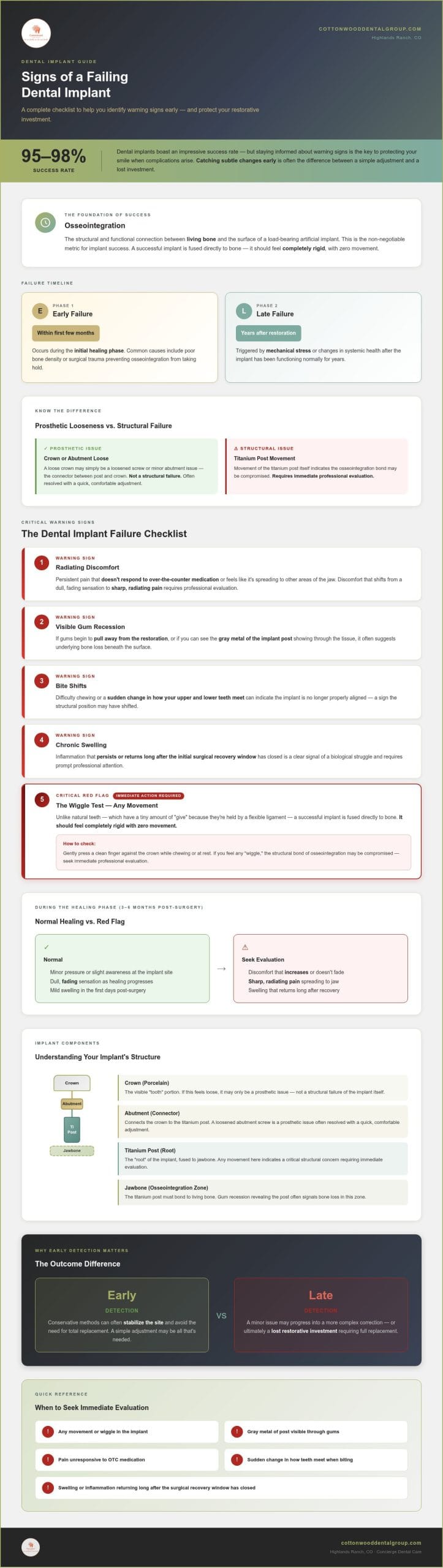
Osseointegration is the non-negotiable metric for implant success, representing the structural and functional connection between living bone and the surface of a load-bearing artificial implant.
Clinically, we categorize issues into two windows. Early failure typically occurs within the first few months during the initial healing phase, often due to poor bone density or surgical trauma. Late failure happens years after the restoration has been in use, usually triggered by mechanical stress or changes in systemic health. Understanding dental implant failure requires looking at both the timing and the specific symptoms you’re experiencing.
Prosthetic Looseness vs. Structural Failure
One of the most common reasons patients visit us with concerns is a sensation of movement. It’s vital to distinguish between the “root” (the titanium post) and the “tooth” (the porcelain crown). If the crown feels loose, the issue might just be a loosened screw or a minor problem with the dental abutment, which serves as the connector between the two pieces. These are prosthetic issues, not structural failures, and they can often be resolved with a quick, comfortable adjustment in our office.
What ‘Normal’ Healing Feels Like in Highlands Ranch
During the first three to six months post-surgery, some sensations are expected. You might feel minor pressure or a slight awareness of the site as your body works to bond with the new post. However, when discomfort shifts from a dull, fading sensation to sharp, radiating pain, it’s time for a professional evaluation. Recognizing the signs of a failing dental implant Highlands Ranch residents can trust involves knowing when “normal” has crossed the line into a clinical concern. We prioritize your comfort during these evaluations, ensuring you feel heard and supported throughout the diagnostic process.
The 2026 Dental Implant Failure Checklist: Signs You Can’t Ignore
Identifying the early signs of a failing dental implant Highlands Ranch patients might encounter is the most effective way to protect your restorative investment. While the vast majority of procedures are life-changing successes, staying vigilant allows us to intervene before a minor issue requires a more complex correction. If you’re experiencing any of the following symptoms, it’s time to seek a professional evaluation to ensure your smile remains on the right track.
Clinical warning signs often manifest in subtle ways before becoming obvious. You should monitor your restoration for these specific indicators:
- Radiating Discomfort: Persistent pain that doesn’t respond to over-the-counter medication or feels like it’s spreading to other areas of the jaw.
- Visible Recession: If your gums begin to pull away from the restoration, or if you can see the gray metal of the implant post showing through the tissue, it often suggests underlying bone loss.
- Bite Shifts: Difficulty chewing or a sudden change in how your upper and lower teeth meet can indicate the implant is no longer properly aligned.
- Chronic Swelling: Inflammation that persists or returns long after the initial surgical recovery window has closed is a clear signal of a biological struggle.
Understanding these dental implant complications and warning signs helps you act quickly. Early detection often means we can use conservative methods to stabilize the site and avoid the need for total replacement.
The ‘Wiggle Test’: Evaluating Implant Mobility
Unlike natural teeth, which possess a tiny amount of “give” because they’re held by a flexible ligament, a successful implant is fused directly to your bone. This means it should feel completely rigid. If you notice even a microscopic amount of movement when you touch the restoration or chew, it’s a critical red flag. You can safely check for mobility by gently pressing a clean finger against the crown; if you feel a “wiggle,” the structural bond of osseointegration may be compromised. This requires immediate attention from a “steady hand” professional to determine if the movement is in the crown or the post itself.
Inflammation and Peri-implantitis
Bleeding, redness, or the presence of pus around the implant site are the primary hallmarks of peri-implantitis. This condition is essentially the implant-specific version of gum disease, where bacteria attack the tissues and bone supporting the post. If caught in the early stages, we can often halt the infection and save the restoration. Modern advancements like laser gum treatment allow us to target harmful bacteria with incredible precision, promoting healing without the need for invasive surgery. Addressing these signs of a failing dental implant Highlands Ranch residents find concerning is much easier when we use these sophisticated, comfort-focused tools. If you’re worried about your restoration, scheduling an expert consultation can provide the clarity and relief you need.
Early vs. Late Implant Failure: Timing and Causes
Understanding when complications arise is just as important as identifying the signs of a failing dental implant Highlands Ranch patients might observe. Timing provides the necessary context for your clinical team to determine the most effective rescue strategy. Generally, we categorize these challenges into two distinct windows: early failure, which occurs during the initial healing phase, and late failure, which can happen years after the restoration has been fully integrated into your smile.
Early failure typically manifests within the first three to four months following surgery. This stage is often influenced by factors that hinder the initial bonding process, such as insufficient bone density, surgical trauma, or the use of tobacco. Smoking, specifically, can significantly restrict blood flow to the surgical site, making it difficult for the bone to weave around the titanium post. Adhering to a meticulous dental implant aftercare routine during this window is your best defense against these early setbacks.
Late failure, on the other hand, occurs after the implant has been successfully in use. In our active Highlands Ranch community, lifestyle factors like high-stress levels or intense physical activity can sometimes lead to unconscious habits that jeopardize long-term stability. Whether it’s a change in your systemic health or a shift in your hygiene habits, these delayed issues are often preventable with consistent professional oversight.
Biological Factors: Bone Loss and Infection
The longevity of your implant depends heavily on the health of your jawbone and the surrounding soft tissue. Over time, systemic conditions like poorly managed diabetes can impact the body’s ability to maintain that vital biological bond. Without the protective barrier of healthy gums, bacteria can infiltrate the site, leading to bone loss. This is why regular professional cleanings in Highlands Ranch are non-negotiable. These visits allow us to monitor the site with precision, catching microscopic changes before they evolve into visible signs of a failing dental implant Highlands Ranch residents should worry about.
Mechanical Factors: Bruxism and Overload
Mechanical stress is another primary culprit behind late-stage complications. Many patients are unaware they grind their teeth at night, a condition known as bruxism. This constant pressure can cause microscopic fractures in ceramic crowns or, worse, overload the implant post itself. Interestingly, your respiratory health plays a role here too. Effective sleep apnea treatment can often reduce the nighttime clenching associated with airway obstructions, indirectly protecting your dental investment. Ensuring your bite force is evenly distributed through correct alignment is a hallmark of our concierge approach to restorative care.
Risk Factors and Prevention: Protecting Your Investment
Preventing the signs of a failing dental implant Highlands Ranch patients worry about starts long before a restoration is even placed. It’s about creating a biological environment where titanium and bone can thrive together without interference. One of the most significant disruptors to this process is smoking. Nicotine constricts blood vessels, which measurably reduces the oxygen and nutrients reaching the surgical site. This lack of circulation can stall the healing process, making the difference between a successful bond and a costly complication.
For patients with existing bone loss, we prioritize foundation building through bone grafting. This procedure ensures there is enough high-quality tissue to support the post long-term. By taking these proactive steps, we help you avoid the anxiety of a loose or unstable restoration. Partnering with a specialized cosmetic dentist in Highlands Ranch ensures that every aspect of your smile, from the biological foundation to the final aesthetic crown, is monitored with extreme precision.
Lifestyle Adjustments for Implant Longevity
How do your daily habits impact your new smile? During the first year of integration, choosing softer foods can reduce unnecessary mechanical stress on the healing site. We also emphasize a concierge approach to home care. An implant-safe hygiene routine means using specialized tools like interdental brushes and non-abrasive cleaners to maintain the health of the surrounding gum tissue. If you tend to clench your jaw during stressful work weeks, a custom-fit nightguard is an essential tool to prevent the excessive force that leads to structural damage.
Professional Monitoring in Douglas County
Regular check-ups are the best way to ensure your investment stays secure. During these specialized visits, Dr. Parsons looks for microscopic indicators of trouble that aren’t visible to the naked eye. We utilize advanced digital X-rays to monitor bone levels around the post, allowing us to spot early bone loss months before it would cause physical symptoms. This level of oversight ensures we catch any signs of a failing dental implant Highlands Ranch residents might miss, preventing minor concerns from escalating into surgical emergencies. If you’re ready to secure your smile with a team that values your long-term comfort, we invite you to schedule your specialized implant check-up today.
Rescue and Restoration: What to Do if Your Implant is Failing
Discovering that your restoration might be in trouble is a stressful experience, but it’s important to remember that a “red flag” doesn’t always signal the end of your smile’s journey. When you notice the signs of a failing dental implant Highlands Ranch specialists are trained to see, the first step is always an immediate, professional evaluation. We don’t just look at the surface; we use advanced diagnostics to determine if the issue is a simple prosthetic looseness or a more complex biological challenge.
If an infection like peri-implantitis is the culprit, our priority is managing it quickly to prevent bone loss. We often employ deep cleaning protocols or targeted laser therapy to decontaminate the site without the need for invasive surgery. However, if the biological bond of osseointegration has been completely lost, the most predictable path forward is often the removal and eventual replacement of the implant. Throughout this entire process, we prioritize your peace of mind by offering sedation dentistry in Highlands Ranch, ensuring that even corrective care is entirely anxiety-free.
The Implant Rescue Process
Can a loose implant actually be saved? In many cases, yes. If the instability is caught early enough, we can explore bone regeneration options that stimulate new growth around the post. If replacement is necessary, the timeline typically involves a healing period to allow the bone to strengthen before a new post is placed. Our concierge approach means we guide you through every milestone, providing a level of personalized detail that makes the revision process feel methodical and supportive rather than daunting. We focus on the long-term success of your restoration, ensuring the new foundation is even stronger than the first.
Your Path Forward at Cottonwood Dental Group
At Cottonwood Dental Group, we specialize in high-end, personalized restorative solutions that restore both function and confidence. We take pride in being the “steady hand” for patients from Lone Tree, Centennial, and Castle Pines who require expert intervention for complex dental needs. Our commitment to excellence means you’ll never feel like just another number in a chair. Whether you need a minor adjustment or a full implant rescue, we provide a sophisticated environment where your long-term health is the only priority. Don’t let uncertainty linger. We encourage you to schedule your implant evaluation with Dr. Parsons today and take the first step toward a secure, beautiful smile.
Protecting Your Restorative Investment for the Long Term
Recognizing the signs of a failing dental implant Highlands Ranch patients might encounter is the first step toward saving your smile. Whether you’ve noticed a subtle shift in your bite or persistent discomfort, early intervention is the most effective way to protect your investment. Most complications are manageable with the right expertise; a warning sign doesn’t have to mean starting from scratch.
At Cottonwood Dental Group, we provide the steady hand and clinical precision necessary for even the most complex restorations. Led by Dr. Parsons, our team offers a boutique experience that prioritizes your peace of mind. We utilize premium sedation dentistry options to ensure your corrective care is as comfortable as it is effective. Our convenient Highlands Ranch location serves families throughout Douglas County with a commitment to high-quality outcomes and personalized care.
Don’t let uncertainty affect your quality of life. We invite you to Book Your Concierge Implant Evaluation at Cottonwood Dental Group today. Your path to a healthy, stable smile is just one conversation away.
Frequently Asked Questions
Is it normal for a dental implant to hurt after 5 years?
No, persistent pain in a long-standing restoration is not normal and usually indicates a late-stage complication. While initial healing involves some sensitivity, a throb or sharp discomfort after five years often signals bone loss or a bacterial infection known as peri-implantitis. If you notice these signs of a failing dental implant Highlands Ranch specialists recommend an immediate evaluation. Catching the issue now prevents the discomfort from spreading to adjacent teeth or the jawbone.
Can a failing dental implant be saved without surgery?
Yes, many compromised implants can be rescued through non-surgical interventions if the issue is caught early. We often utilize advanced laser gum treatment to decontaminate the area and halt the spread of infection around the post. This approach avoids the need for invasive procedures and promotes natural tissue healing. However, success depends on the stability of the underlying bone; this makes frequent professional monitoring in Douglas County essential for long-term preservation.
What does an infected dental implant feel like?
An infected implant often presents as a dull, radiating ache accompanied by redness or swelling in the gum tissue. You might also notice a persistent bad taste or odor, which indicates the presence of bacteria or pus around the site. Unlike a typical toothache, this discomfort feels deeper within the jaw. Because these sensations are key signs of a failing dental implant Highlands Ranch residents should never ignore them, as they indicate the biological bond is under attack.
How much does it cost to fix a failing dental implant in Highlands Ranch?
The investment required to restore a compromised implant depends entirely on the specific nature of the failure. A simple adjustment to a loose crown is far less involved than a full structural rescue involving bone grafting or laser therapy. We provide a detailed, personalized breakdown of your treatment plan during your consultation. Our goal is to offer transparent, concierge-level guidance so you can make an informed decision about protecting your long-term health and smile.
Can smoking cause my dental implant to fail years later?
Yes, smoking remains a significant risk factor for late-stage failure even years after a successful procedure. Tobacco use constricts the blood vessels in your gums, which limits the oxygen and nutrients necessary to maintain healthy bone density around the post. This weakened environment makes the site more susceptible to infection and mechanical stress. Patients in Centennial and Lone Tree find that quitting or reducing tobacco use is one of the most effective ways to ensure their restoration remains stable.
What happens if I ignore the signs of a failing dental implant?
Ignoring warning signs typically leads to progressive bone loss and a systemic spread of infection. If the biological bond between the bone and titanium is allowed to deteriorate, the implant will eventually become loose and fall out. This often results in more complex and expensive reconstructive surgeries later on. Acting quickly ensures we can use conservative rescue methods to stabilize the site, preserving your jawbone health and the aesthetic integrity of your smile.
Is dental implant failure covered by insurance in Colorado?
Insurance coverage for restorative revisions varies significantly depending on your specific provider and plan details. While some policies contribute toward the cost of removing an infection or replacing a crown, others may categorize these as cosmetic or elective. We recommend contacting your insurance carrier to verify your benefits for restorative care in Douglas County. Our team is happy to assist you in navigating your policy to ensure you maximize any available coverage for your treatment plan.
How do I know if my implant crown is just loose or if the whole post is failing?
Determining the source of movement requires a professional clinical exam and digital imaging. If only the porcelain crown wiggles while the base remains firm, the issue is likely a loose prosthetic screw or abutment; this is a simple fix. However, if the entire structure moves, it indicates the titanium post has lost its bond with the bone. This distinction is critical for choosing the right rescue path and ensuring your restoration stays secure for years to come.
