
October 16, 2026

Long lasting teeth whitening depends less on choosing a stronger treatment and more on understanding what causes stains and how you care for your smile afterward. Results can fade sooner than expected, especially when coffee, tea, or other daily habits are part of your routine. Whitening can also feel unpredictable, and it’s understandable to have questions about sensitivity or whether it’s suitable for your teeth.
This guide explains what affects how long whitening results last, including the type of discoloration, the method used, and your everyday habits. You’ll find practical ways to maintain a brighter appearance, from noticing frequent exposure to staining foods and drinks to keeping up with oral hygiene. We’ll also cover temporary sensitivity and how a dentist can assess your oral health, discuss possible stain causes, and help set realistic expectations. At Cottonwood Dental Group in Highlands Ranch, personalized cosmetic and general dental care can help you explore your options with your smile in mind.
Key Takeaways
- Think of long lasting teeth whitening as maintaining a brighter appearance, not achieving a permanent change or a guaranteed timeline.
- Surface stains and discoloration within a tooth can affect what whitening may achieve.
- Daily staining habits, dental work, and ongoing care can all influence how your results look over time.
- Build a simple maintenance routine by following treatment instructions, brushing consistently, and cleaning between your teeth.
- A personalized teeth whitening discussion at Cottonwood Dental Group in Highlands Ranch can help clarify stain causes, suitability, and realistic goals.
What Does Long-Lasting Teeth Whitening Really Mean?
A brighter smile without expecting it to stay that way forever is a sensible goal. Whitening results naturally change over time, so “long-lasting” means keeping a brighter appearance for as long as your teeth, treatment, and daily habits allow. It doesn’t mean your teeth have become permanently white or that everyone’s results will last for the same amount of time.
Longer-lasting whitening means maintaining a brighter appearance over time; it doesn’t mean permanent whitening. Your starting shade, the cause of discoloration, the approach used, and repeated exposure to staining foods and drinks can all influence how long the change remains noticeable. Two people who choose similar treatments may see different results because their teeth and routines differ.
How Long Can Teeth Whitening Results Last?
There isn’t one reliable timetable for everyone. Professional whitening and at-home approaches differ in how they’re used, the results each person achieves, and the maintenance involved. Even after professional treatment, visible brightness can gradually shift as new stains develop. At-home products also vary, so their effects and maintenance needs depend on the product and how it’s used.
Rather than relying on a fixed duration, consider what may affect your own results. Frequent exposure to staining drinks, for example, may make a brighter shade harder to maintain than occasional exposure. The Tooth whitening overview describes common approaches and causes of discoloration, but a general reference can’t predict an individual result. A dentist can discuss your starting shade, oral health, and goals to help set realistic expectations.
What Does a Natural Tooth Shade Look Like?
Healthy teeth aren’t necessarily bright, uniform white. Natural shades vary, and small differences between teeth are common. Visible color comes partly from two layers: enamel, the hard outer covering, and dentin, the layer underneath. Enamel is somewhat translucent, so the color of the dentin can influence the shade you see. Whitening changes the appearance of natural teeth, but it doesn’t make every smile the same shade.
A natural-looking goal usually means choosing a brightness that feels harmonious with your features and the rest of your smile, rather than chasing an artificial-looking white. Focus on the change you’d like to see, not only on a shade you’ve noticed on someone else. Your teeth may respond differently, and a dental discussion can help clarify what’s realistic for your starting shade and the source of discoloration.
In short, long lasting teeth whitening is less about reaching a single ideal shade and more about achieving a brighter look that suits you, then caring for your smile to support that appearance. This keeps expectations grounded and makes it easier to judge progress without treating a natural change in shade as a failed result.
Why Whitening Results Fade: Stains, Tooth Structure, and Treatment
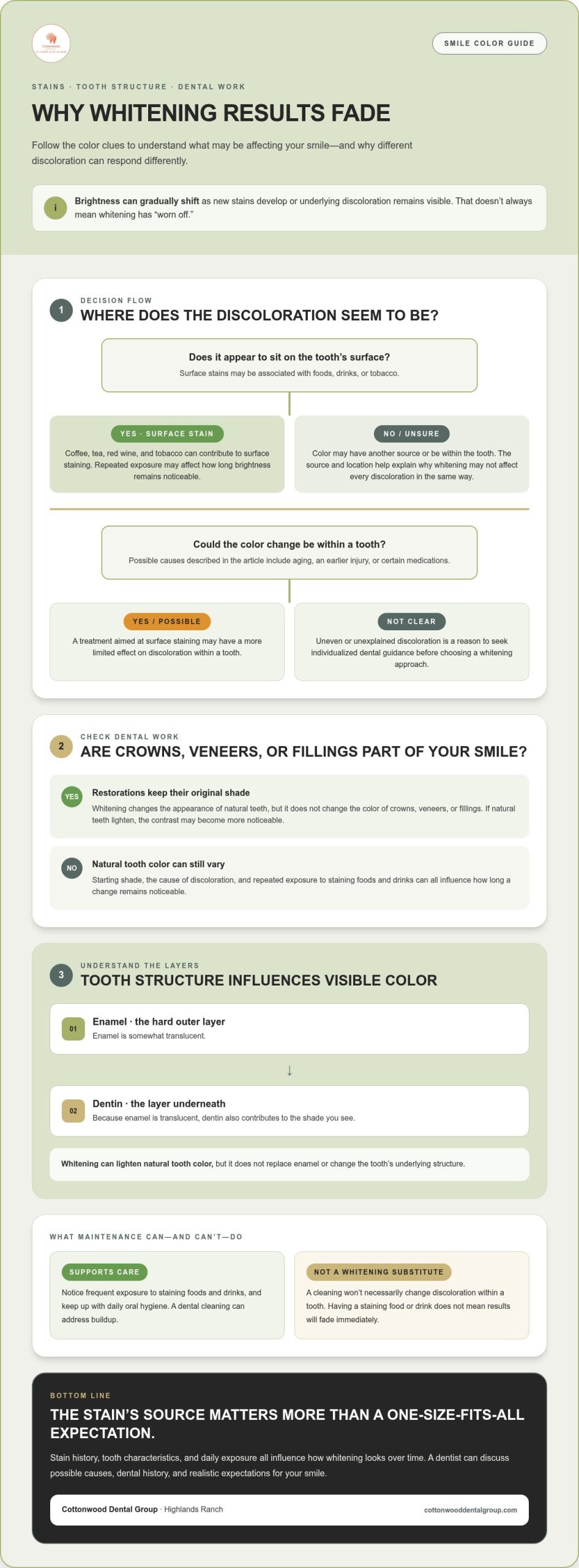
A brighter smile can gradually look less bright as new stains develop or underlying discoloration remains visible. That doesn’t always mean whitening has “worn off.” Results depend partly on what caused the original color, where the discoloration sits, and how your teeth respond to treatment. These differences help explain why the same approach may look different from one person to another.
Whitening results vary because each smile has its own stain history, tooth characteristics, and pattern of daily exposure.
How Food, Drinks, and Tobacco Can Affect Tooth Color
Coffee, tea, and red wine contain pigments that can contribute to surface stains. Tobacco can also discolor teeth. These exposures don’t affect everyone in exactly the same way, and having a staining food or drink doesn’t mean your results will fade immediately. Frequency and repeated contact may matter. Sipping coffee throughout the day, for instance, creates a different pattern of exposure than having it occasionally.
You don’t need to permanently give up every food or drink you enjoy. Instead, notice which habits are frequent and keep up with daily oral hygiene. A dental cleaning can address buildup, but it isn’t a substitute for whitening and won’t necessarily change discoloration within a tooth. The ADA guidelines on teeth whitening explain how treatment approaches and types of stains can influence what whitening may address.
Why Some Discoloration Responds Differently
Surface stains, also called extrinsic stains, sit on the outside of teeth and may be associated with foods, drinks, or tobacco. Other discoloration arises within a tooth and may relate to aging, an earlier injury, or certain medications. Because the source and location differ, these types of color change may not respond alike to whitening. A treatment suited to surface staining may have a more limited effect on discoloration within a tooth.
Enamel is the hard outer layer of a tooth. It is somewhat translucent, so the dentin beneath it also contributes to the color you see. Whitening can lighten natural tooth color, but it doesn’t replace enamel or change the tooth’s underlying structure. It also doesn’t change the color of dental restorations, including crowns, veneers, or fillings. If natural teeth lighten while a restoration keeps its original shade, the contrast may become more noticeable.
Uneven or unexplained discoloration is a reason to seek individualized dental guidance before choosing a whitening approach. A dentist can discuss possible stain causes, your dental history, and realistic expectations. Cottonwood Dental Group offers personalized teeth whitening care in Highlands Ranch. You can learn more through personalized teeth whitening care.
Which Factors Make Whitening Results Last Longer?
No single habit or treatment determines how long a brighter smile will last. The source of discoloration, your everyday exposure to staining, existing dental work, and the care you follow afterward all shape what you may notice. Use the guide below to consider which factors may matter for you. It can help set expectations, but it isn’t a diagnosis or a promise of specific results.
| Factor | How it may affect expectations | Maintenance consideration |
|---|---|---|
| Stain cause | Surface stains and discoloration within the tooth may respond differently to whitening. | Understanding the likely source can help guide treatment discussions. |
| Daily exposure | Frequent contact with staining foods, drinks, or tobacco may contribute to new stains. | Notice recurring habits and maintain consistent oral hygiene. |
| Dental work | Crowns, veneers, and fillings don’t change shade with whitening of natural teeth. | Consider how existing restorations may affect the overall appearance. |
| Ongoing care | Results may look different over time as new stains accumulate. | Follow treatment directions and individualized dental advice. |
These factors can work together. Someone with surface staining and few regular stain exposures may have different maintenance needs from someone whose discoloration has several possible causes or who has visible restorations. A plan for long lasting teeth whitening should account for both the desired change and the condition of your teeth, rather than rely on a one-size-fits-all timetable.
Professional Whitening and At-Home Options: Longevity Considerations
Professional whitening and at-home options differ in how treatment is provided and how you follow its instructions. Dentist-provided options may include whitening products used with custom trays, while nonprescription products are selected and used at home according to their directions. Neither category guarantees a particular duration. Your stain type, oral health, and consistency with recommended use all influence what maintenance may look like.
When weighing options, consider more than convenience. A dentist can assess whether whitening suits your teeth and discuss an approach that fits your dental condition and goals. For a broader perspective on how whitening fits within cosmetic dentistry in Highlands Ranch, consider your overall smile goals alongside the shade you’d like to achieve.
How Dental Work and Sensitivity Affect Your Plan
Existing restorations can affect how even your smile looks after whitening, since their shade won’t lighten along with natural teeth. Sensitivity matters, too. If your teeth are already sensitive, or whitening has caused discomfort before, that may influence the timing or approach worth discussing. Don’t assume that using a product more often or choosing a stronger one is the right response.
A dental assessment can account for restorations, sensitivity, and other concerns before you begin. With personalized guidance, you can discuss possible stain causes, suitable options, and a realistic outcome for your smile.
How to Maintain a Whiter Smile After Treatment
Maintaining a brighter appearance doesn’t require a complicated routine. Focus on three practical steps: use whitening products as directed, keep up with daily oral care, and notice which habits may contribute to new stains. Consistency is more useful than adding extra products or making sweeping changes to your diet.
- Follow your treatment instructions. Use a whitening product only as directed by its manufacturer or your dentist. More frequent or longer use isn’t automatically better and could increase the chance of sensitivity or gum irritation.
- Keep up with routine oral hygiene. Brush regularly and clean between your teeth consistently, using the tools and technique recommended for your needs. Good home care supports oral health and helps manage surface buildup, though it can’t prevent every stain or guarantee that whitening results will last.
- Notice your patterns. Pay attention to how often you have foods or drinks that may contribute to staining. Small, sustainable adjustments can be easier to maintain than avoiding everything you enjoy.
Everyday Habits That Help Preserve a Brighter Appearance
After coffee, tea, or another stain-contributing drink, rinsing your mouth with water can help clear residue. Treat it as a simple addition, not a replacement for brushing or a guaranteed way to prevent stains. Keep your regular oral care routine steady, including cleaning between teeth rather than focusing only on the visible front surfaces.
If you use tobacco, reducing or avoiding it can benefit your oral health and may help limit one source of tooth discoloration. A dental professional can discuss supportive steps if changing the habit is a goal. Whitening rinses, extra whitening products, or restrictive diets shouldn’t be treated as reliable shortcuts. A balanced routine tailored to your teeth is a practical foundation for long lasting teeth whitening.
When to Consider Touch-Ups or a Dental Check-In
Touch-up timing depends on the treatment you used, your habits, and your individual dental guidance. Follow product directions, and don’t repeat whitening more often than they allow. If you received dentist-directed instructions, use those rather than guessing when to start another round. A dentist can advise whether professional cleanings and touch-ups make sense for your oral health and goals.
Pause and seek dental guidance if you develop new sensitivity, notice an uneven change in color, or see an unexpected change in a tooth. These signs don’t automatically mean there’s a serious problem, but they’re worth discussing before you continue whitening. Existing dental work or a change in your oral health may affect the safest next step.
For personalized guidance on maintaining your results and planning whitening care around your needs, discuss your teeth whitening options with Cottonwood Dental Group in Highlands Ranch.
Get Personalized Teeth Whitening Guidance in Highlands Ranch
Whitening is more straightforward when the plan begins with your smile, not a one-size-fits-all promise. A dental discussion can help identify likely stain causes, review factors that may affect suitability, and clarify what kind of change may be realistic. It’s also a chance to talk through concerns before choosing how to proceed, especially if your teeth have felt sensitive or your color has changed unexpectedly.
What to Discuss Before Whitening
Before considering treatment, share any sensitivity you’ve noticed, relevant dental history, and restorations such as crowns, veneers, or fillings. Mention whether discoloration affects one tooth or several, when you first noticed it, and what you hope a brighter smile will look like. These details help the dentist understand what may contribute to the shade and how existing dental work could affect the overall appearance.
An individualized review can help shape suitable expectations and a thoughtful care plan. Whitening changes the color of natural teeth, but restorations don’t whiten in the same way, and different causes of discoloration may respond differently. If you’re unsure what a change in color means, an online description can’t diagnose it. A dentist can assess your teeth directly and discuss whether whitening is appropriate for your circumstances.
You can also ask how sensitivity may influence the approach, what instructions you’ll need to follow, and how to plan for maintenance. Sharing your concerns openly helps the conversation focus on comfort as well as appearance. There’s no need to arrive with a particular shade in mind. Describing what you’d like to improve is a helpful place to start.
A Patient-Centered Path to Whitening Care
Cottonwood Dental Group provides personalized cosmetic and general dental care, including teeth whitening, in Highlands Ranch. Patients from nearby communities such as Lone Tree, Centennial, Castle Pines, and Parker can discuss their goals in the context of their dental health and history. A considered conversation can cover possible stain causes, existing restorations, sensitivity, and maintenance that may fit your routine.
This guidance can help you weigh a brighter appearance against practical considerations without assuming a particular shade or duration. Your dentist can explain what to expect based on your teeth, discuss care instructions, and help you understand when a follow-up or professional cleaning may be useful. The aim is to make informed choices that feel appropriate for you, rather than chase an outcome that may not suit your natural smile.
If you’re considering long lasting teeth whitening, Cottonwood Dental Group welcomes a conversation about your smile and your goals. Schedule a discussion to explore personalized whitening guidance in Highlands Ranch and take a comfortable, informed next step.
Make Your Next Whitening Choice With Confidence
A brighter smile doesn’t need to follow someone else’s timeline or shade. Your next step can be deciding what feels right for your teeth, comfort, and goals. With a thoughtful plan and realistic expectations, long lasting teeth whitening becomes less about chasing perfection and more about feeling at ease with your smile.
If you’re weighing your options, a personal conversation can help turn general advice into guidance that fits your dental needs. Cottonwood Dental Group offers teeth whitening as part of its personalized cosmetic and general dental care in Highlands Ranch. You can explore the service and consider what questions you’d like to bring to a dental discussion.
Explore personalized teeth whitening care at Cottonwood Dental Group, and take the next step toward a brighter smile with confidence.
Frequently Asked Questions
How long does professional teeth whitening usually last?
Professional whitening results don’t follow one standard timetable. They vary with the treatment, your starting tooth shade, and your routine afterward. Think of the result as a change to maintain, not a set number of months on a calendar. If you’re planning around a particular event, mention that to your dentist. They can discuss timing and realistic expectations for your teeth, including whether treatment is appropriate.
Can teeth whitening results last for years?
They may remain noticeable for an extended time, but you shouldn’t count on a specific number of years. Whitening isn’t permanent, and new stains or other changes in tooth color can affect how bright your smile appears. For long lasting teeth whitening, ask your dentist what maintenance may suit your treatment and habits. Avoid repeating a whitening course simply because a certain amount of time has passed.
What foods and drinks can make whitening results fade faster?
Coffee, tea, and red wine can contribute to surface staining, particularly when they’re part of a frequent routine. Tobacco is another possible source of discoloration. You don’t have to eliminate every favorite drink or food. For example, if you sip coffee throughout the day, consider whether you’d like to adjust that pattern, and keep up with regular brushing and cleaning between your teeth.
Does teeth whitening work on crowns, veneers, or fillings?
No. Whitening products lighten natural teeth, not the material used in crowns, veneers, or fillings. If a restoration is visible near teeth you want to whiten, its existing shade may look different from the surrounding teeth afterward. Before treatment, tell your dentist which teeth have dental work and whether it’s visible when you smile. That context can help you discuss a balanced approach to your overall smile.
Can I whiten my teeth if they are sensitive?
Possibly, but sensitivity is a reason to discuss whitening with a dentist before starting. Whitening can cause temporary sensitivity or gum irritation, and existing discomfort may call for an assessment before you use a product. Tell your dentist what triggers the sensitivity, how long it has been present, and whether whitening has bothered you before. Don’t try to push through worsening discomfort or use a product more often than directed.
How often can I safely touch up teeth whitening?
There isn’t one safe touch-up interval for everyone. Follow the instructions for the product you used or the schedule your dentist recommended, and don’t repeat treatment more frequently than directed. If you’re unsure whether your teeth need a touch-up, a dental check-in can help distinguish new surface staining from another change in color. This is especially useful if your teeth feel different or the shade change seems uneven.
Is professional teeth whitening more long-lasting than whitening strips?
Not necessarily for every person. Professional whitening and strips differ in how they’re used, and results depend on factors such as stain type, product directions, and your habits afterward. A professional assessment can help match an option to your teeth and goals, especially if you have sensitivity or dental work. If you’re considering whitening in Highlands Ranch, Lone Tree, Centennial, Castle Pines, or Parker, bring those details to a dental discussion.
