
October 13, 2026
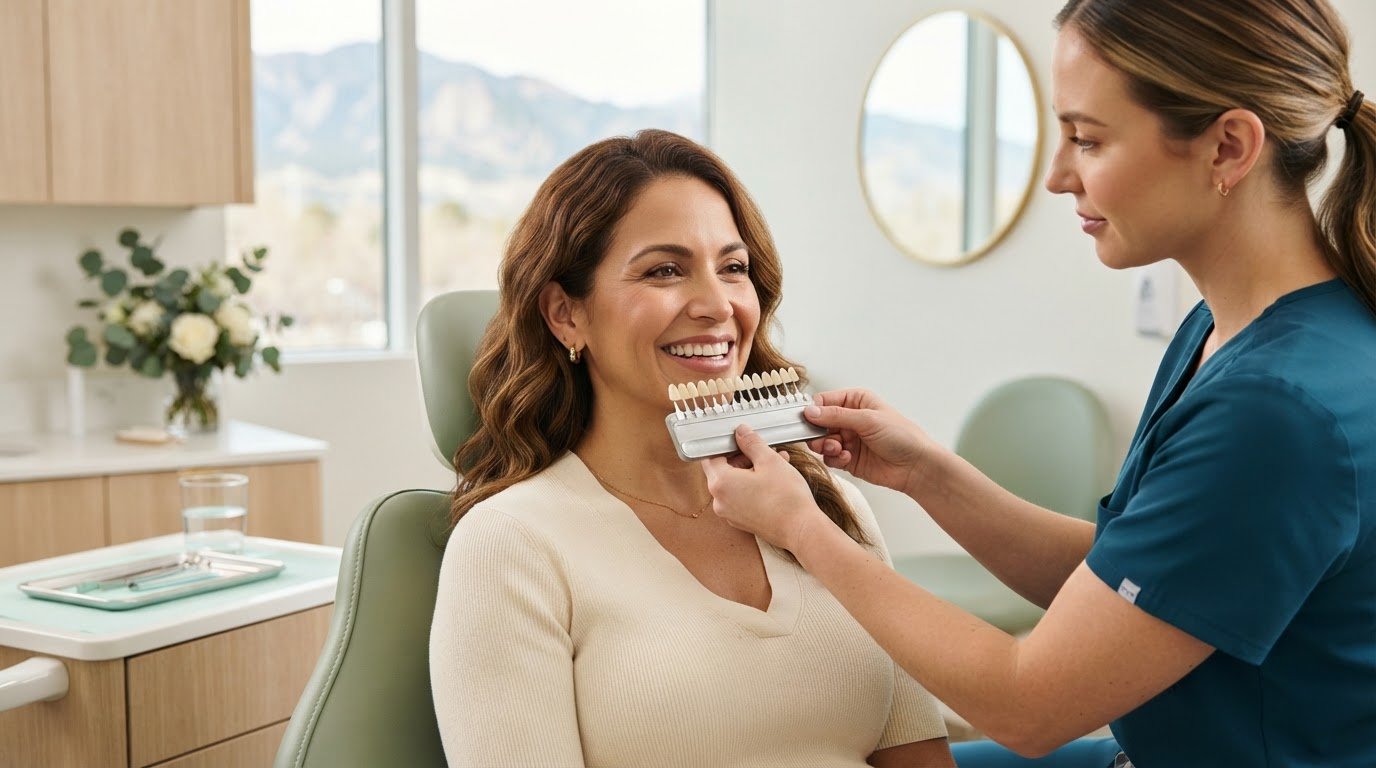
The whitest veneer shade isn’t always the one that makes your smile look its best. If you’re choosing a shade for porcelain veneers, it can be difficult to picture how a color on a shade guide will look with your complexion, nearby teeth, and other features. You may want a brighter smile while also hoping the result won’t feel too stark or unlike you.
A flattering shade is about harmony, not simply choosing the brightest option. Your goals, the color of your natural teeth, and whether you’re considering whitening can all shape the decision. A dentist can help you compare options in the context of your smile before you settle on a direction.
This guide explains what influences veneer shade selection, how to compare subtle and brighter options, and what to discuss before making a decision. Thinking through these details can help you describe what you want and feel more prepared for a personalized conversation.
Key Takeaways
- Start with the smile you want, then consider how the shade will harmonize with your features rather than defaulting to the whitest option.
- Complexion, lips, nearby natural teeth, and lighting can influence how veneer color appears.
- Compare subtle and brighter options by considering the overall look, contrast, and your personal preference.
- Prepare by gathering inspiration, identifying your goals, and noting questions about existing tooth color and whitening.
- A personalized discussion at Cottonwood Dental Group in Highlands Ranch can help you explore your shade goals and veneer suitability.
Choosing a Shade for Porcelain Veneers Starts With Your Smile Goals
A brighter smile can feel polished and refreshing, so it’s natural to gravitate toward a lighter veneer shade. But choosing a shade for porcelain veneers isn’t about finding one universally “best” white. The shade is the visible color selected for the porcelain restorations, and the right direction depends on how you want your smile to look and feel.
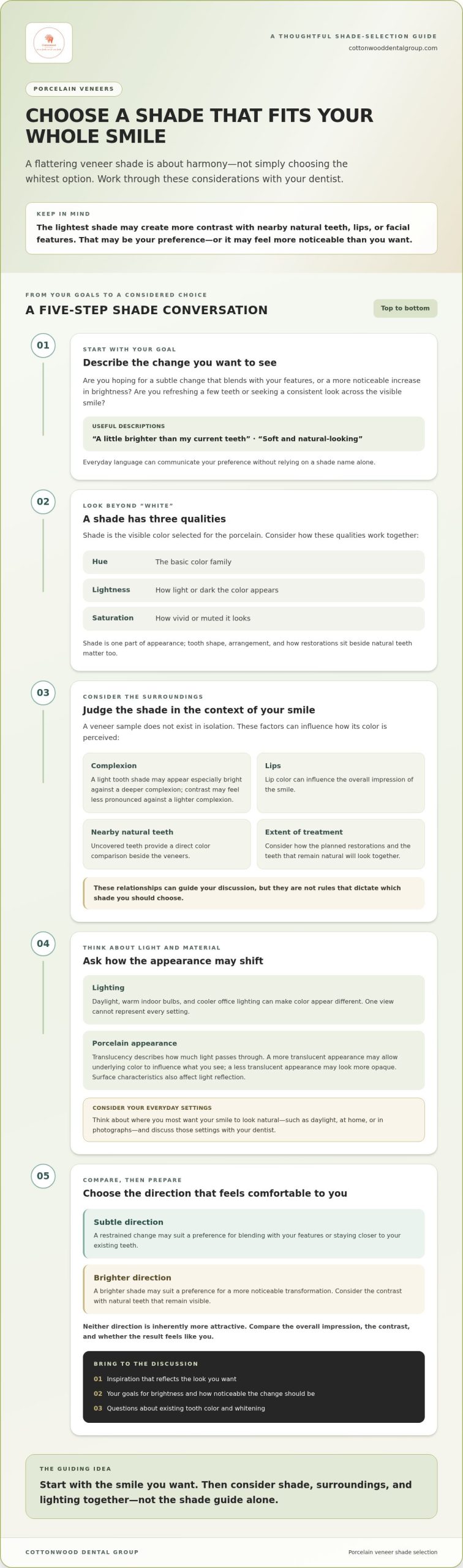
Begin by describing your goal in everyday terms. Are you looking for a subtle change that blends with your features, or a more noticeable increase in brightness? Are you refreshing a few teeth or aiming for a consistent look across the visible smile? These preferences give your dentist a useful starting point for discussing suitable shades and how they may work with your smile.
What does a porcelain veneer shade describe?
Shade refers to the color you see in the veneer. It can be described through three qualities: hue, the basic color family; lightness, how light or dark the color appears; and saturation, how vivid or muted it looks. Together, these qualities shape the impression of a tooth’s color. Shade is only one part of a smile’s appearance, which also includes tooth shape, arrangement, and how restorations sit beside natural teeth. For a general overview of the purpose and types of dental veneers, see Veneers (dentistry).
Bring descriptions rather than relying on a shade name alone. Phrases such as “a little brighter than my current teeth” or “soft and natural-looking” communicate your preference without committing to a specific color. Your dentist can help connect those preferences to shade options and the rest of your treatment plan.
Why the whitest shade is not automatically the best fit
A very bright shade can create strong contrast with nearby natural teeth, lips, or other facial features. That contrast may be exactly what you want, but it can also make the veneers stand out more than you prefer. The lightest available option isn’t automatically the most flattering; the aim is to find a shade that suits your priorities and feels balanced in context.
“Natural-looking” means different things to different people. You might want a shade close to your existing teeth, or a cleaner, brighter appearance that still feels at home with your features. Think about the overall impression you want, then discuss it as part of your cosmetic dentistry planning.
What Influences the Right Porcelain Veneer Shade?
A veneer shade can look different depending on what surrounds it. Complexion, lip color, nearby teeth, and lighting all affect how the eye perceives color. For that reason, choosing a shade for porcelain veneers is best approached as a whole-smile decision, not by judging a sample on its own.
How complexion and surrounding teeth affect shade perception
Teeth are seen in visual context. Against a deeper complexion, a light tooth shade may appear especially bright; against a lighter complexion, the contrast may feel less pronounced. Lip color can influence the overall impression, too, while adjacent natural teeth provide a direct color comparison. These relationships can guide a conversation, but they are not rules that dictate which shade you should choose.
Consider which teeth will remain natural and visible. If veneers cover only some teeth, the uncovered teeth will still be part of your smile and may look different beside the restorations. Discuss how the planned veneers and surrounding teeth will look together rather than evaluating each veneer as an isolated sample.
Complexion, lips, adjacent natural teeth, and the extent of treatment all influence how a veneer shade is perceived, so consider the color as part of the complete smile.
Think about the impression you want in everyday life. If you prefer a subtle change, discuss how the shade will relate to natural teeth that remain visible. If you want more contrast, say so. These details help your dentist understand your preferences without turning skin tone or lip color into a formula.
Why lighting and porcelain appearance matter
Color can appear different in daylight, under warm indoor bulbs, or in cooler office lighting. A shade that seems bright in one setting may look softer or more pronounced in another. A single view can’t represent exactly how a shade will appear in every setting.
Porcelain’s translucency describes how much light can pass through the material. A more translucent appearance may allow underlying color to influence what you see, while a less translucent appearance may look more opaque. Surface characteristics also affect how light reflects from a tooth. Discuss these qualities with your dentist rather than focusing on shade alone.
Consider where you most want your smile to look natural, such as in daylight, at home, or in photographs. Ask how the proposed shade may appear in those settings and share any concerns about contrast with nearby teeth. For a personalized conversation about your goals, explore a porcelain veneer shade discussion with Cottonwood Dental Group.
Natural-Looking or Brighter Veneers: How to Compare the Options
There isn’t one shade that suits every smile. A subtle option may appeal if you want a restrained change, while a brighter shade may better reflect a preference for a noticeable transformation. Neither is inherently more attractive. The key is deciding which direction feels right to you and fits the smile being planned.
Compare options by considering more than lightness. Think about how noticeable you want the change to be, how the veneers may contrast with natural teeth that remain visible, and whether the overall impression feels comfortable and like you. These are useful points to discuss, not promises about exactly how a shade will look.
| Consideration | Subtle, natural-looking direction | Brighter direction |
|---|---|---|
| Overall impression | May feel understated and blend with the smile. | May create a more noticeable change. |
| Contrast | Consider how the veneers relate to nearby natural teeth. | Discuss whether added contrast feels comfortable to you. |
| Personal preference | May suit a goal of quiet refinement. | May suit a goal of visible brightness. |
When a subtle shade may suit your goals
An understated shade may appeal if you want your smile refreshed without drawing attention to the color change. You may prefer an effect that feels consistent with your other visible teeth, especially if some natural teeth will remain uncovered. But “subtle” means different things to different people, so discuss the shade in relation to your features and planned smile.
When a brighter shade may match your preference
If you want the change to be easy to notice, a brighter direction may suit your vision. It’s reasonable to prefer a luminous, polished appearance. Talk through how much contrast feels appealing rather than assuming brighter automatically means better. Your comfort with the proposed look matters more than a shade trend.
As you compare options, describe the result you want: “a soft change,” “more brightness,” or “a clear transformation.” Then consider how that preference fits the placement of the veneers and any natural teeth that will remain visible. This keeps the conversation practical and personal.
Choosing a shade for porcelain veneers means weighing appearance, contrast, and personal comfort together. Your dentist can consider these factors as part of the full smile plan. You don’t need to arrive with a technical color name; knowing what you like and what you want to avoid is a helpful place to begin.
How to Prepare for Choosing Your Porcelain Veneer Shade
A little preparation can make shade planning more focused. You don’t need to know a technical shade name. Bring a clear idea of what you hope to change, examples that help explain your preferences, and questions about how veneers may relate to your natural teeth.
- Identify your goals. Decide whether you want a subtle refresh or a more noticeable change. Note what you want your smile to communicate and what would feel too bright or too different.
- Gather a few examples. Save images that show the general appearance you like. Look for patterns, such as brightness or an understated feel, rather than asking to copy another person’s smile exactly.
- Write down concerns. Include questions about contrast, the color of teeth that won’t receive veneers, and how the proposed shade will be evaluated before it’s finalized.
Bring clear preferences, not a single shade demand
Examples are most useful when you can explain what appeals to you. Is it the overall brightness, how the smile works with the person’s features, or the level of contrast? Share what you like and what you’d want to avoid, including a result that feels too stark or too subtle. This gives your dentist room to connect your preferences with your smile and treatment plan.
You might ask, “How would this shade relate to the natural teeth around the veneers?” or “What will we use to evaluate the proposed color?” These questions help clarify the planning process without requiring you to choose from a shade guide on your own.
Discuss whitening and existing teeth before final shade decisions
Natural teeth that remain visible can influence how veneers look beside them. If you’re considering teeth whitening, raise that goal before settling on a veneer shade. Whitening and veneer treatment may need to be discussed in sequence so the shade conversation accounts for your plans for natural teeth. Your dentist can help you understand how existing tooth color fits into planning your smile.
Before finalizing a choice, consider asking:
- How will the proposed veneer shade relate to the natural teeth that remain visible?
- Should we discuss my whitening goals before deciding on a veneer shade?
- How will we evaluate the shade and the overall appearance together?
Bring your notes to a personalized shade-planning conversation at Cottonwood Dental Group. Discuss your porcelain veneer goals with the team in Highlands Ranch.
Plan Your Veneer Shade With Cottonwood Dental Group in Highlands Ranch
Shade planning is a personal conversation, not a test you need to prepare for by choosing a technical color name. At Cottonwood Dental Group, a concierge cosmetic and general dental practice in Highlands Ranch, Colorado, you can share what you hope to change and how you want your smile to feel. That gives your dentist a starting point for discussing porcelain veneer suitability and shade options in relation to your needs.
What to discuss at a veneer consultation
Describe the balance you’re looking for: a brighter appearance, a more understated change, or something between the two. Mention concerns about contrast, nearby natural teeth, or a result that might feel too noticeable. Your dentist can consider your preferences alongside clinical factors when discussing whether veneers may be appropriate and which shade direction to explore.
It may help to bring a few questions, such as:
- How might the planned shade relate to the teeth that will remain natural?
- What factors will guide a shade recommendation for my smile?
- How will we evaluate the proposed shade as part of the overall treatment discussion?
- What should I consider if I’m also thinking about whitening my natural teeth?
There’s no need to arrive with a fixed answer. If you’ve saved inspiration images, explain which details appeal to you rather than expecting an exact match. You might like the brightness in one example but prefer the softer overall appearance of another. Sharing both preferences can make the conversation more precise and collaborative.
Your next step for porcelain veneers in Highlands Ranch
Choosing a shade for porcelain veneers involves both your goals and professional guidance. The discussion can take into account the smile you envision, the teeth around the planned veneers, and your preferences about brightness and a natural appearance. Recommendations are individualized, so a consultation is an opportunity to explore what may suit you.
Cottonwood Dental Group provides personalized care as part of its cosmetic and general dentistry practice in Highlands Ranch. Patients from Lone Tree, Centennial, Castle Pines, and Parker can discuss their smile goals with the practice as well. If you’re considering veneers, bring your questions and share what matters most to you.
Take the Next Step Toward a Smile That Feels Like You
You don’t need to settle every detail before starting a conversation. Put your preferences into words: what you’d like to change, what feels too bright or too subtle, and what would make the finished smile feel like you. Those details can guide a thoughtful discussion as you consider your options.
Choosing a shade for porcelain veneers is a personal decision, and it’s reasonable to take time to understand the choices. Bring your questions and ideas to a one-on-one conversation with Cottonwood Dental Group. Its personalized approach to cosmetic care can help you explore your goals and discuss whether veneers may suit your smile.
Explore personalized cosmetic dentistry at Cottonwood Dental Group and take a comfortable first step toward a smile that reflects your preferences.
Frequently Asked Questions
Can porcelain veneers be made any shade?
Veneer shade selection is individualized, but not every shade is appropriate or available for every case. Your dentist considers the porcelain, the teeth around the planned veneers, and the appearance you’re hoping for. Bring examples that communicate your preferences, along with concerns such as looking too bright or too different from your natural smile. Discussing these together helps evaluate your desired look in context during treatment planning.
Should I choose the whitest shade for porcelain veneers?
No. The brightest option isn’t automatically the best fit, though wanting a bright smile is a valid preference. Complexion, nearby natural teeth, and the contrast you’re comfortable with can all influence how the overall smile appears. Rather than choosing by a shade label alone, explain the effect you want. Do you prefer a noticeable change or a lighter appearance that feels more understated?
Can I whiten porcelain veneers after they are placed?
No, conventional bleaching doesn’t whiten porcelain the way it can lighten natural tooth enamel. This matters if your natural teeth and veneers are both visible, since their colors may respond differently to whitening. Discuss your shade goals before treatment so the dentist can consider them during planning. If the appearance of existing veneers changes or concerns you, ask your dentist to assess the situation and discuss appropriate options.
Do porcelain veneer shades look different in natural and indoor light?
Yes, lighting can affect how you perceive color, so a veneer shade may look somewhat different in daylight than under warm or cool indoor lights. Each setting changes the way color is seen. Ask how the proposed appearance will be assessed, and mention where you’re most concerned about how your smile will look, such as at home or in everyday photographs.
Can my veneers match my natural teeth?
A close visual relationship may be a goal, but the result depends on how many veneers are planned, where they’ll sit, and the color of the natural teeth beside them. Your dentist can discuss how the proposed shade may relate to your complete smile. If both porcelain and natural enamel will show, describe whether you prefer close coordination or a deliberate difference, without expecting an exact match to be guaranteed.
When should I choose a veneer shade if I am also considering teeth whitening?
Discuss whitening before finalizing the veneer shade. Whitening can change natural tooth color, while porcelain veneers don’t respond to bleaching in the same way, so the order of decisions can affect how the teeth look together. Your dentist can help determine the appropriate sequence for your treatment plan. Patients considering care in Highlands Ranch, Lone Tree, Centennial, Castle Pines, or Parker can raise both goals during a shade-planning discussion.
