
October 15, 2026

A tooth can be decaying even when it doesn’t hurt. A faint spot, brief sensitivity, or no noticeable change at all can leave you wondering whether you’re seeing tooth decay symptoms or something else. Early decay often develops without clear warning signs, so the absence of pain doesn’t necessarily mean everything is fine.
If you’ve noticed a change in a tooth, pay attention to what it looks or feels like, but remember that symptoms alone can’t confirm a cavity. This guide covers common signs of tooth decay, what different kinds of sensitivity or pain may indicate, and when to arrange a dental evaluation. It also explains what details to note before your visit and which symptoms call for prompt attention. That information can help you take a steady, informed next step without jumping to conclusions.
Key Takeaways
- Tooth decay symptoms vary, and a spot or twinge alone can’t confirm what’s happening.
- Decay may develop beneath the surface before you notice a change, so pain isn’t a dependable early warning.
- Note what triggers sensitivity, how long it lasts, and whether it’s changing, but don’t try to diagnose the cause at home.
- A dental evaluation can help distinguish possible decay from other causes of discomfort or tooth changes.
- Cottonwood Dental Group provides personalized dental care in Highlands Ranch to help patients understand their concerns and next steps.
What Are the Most Common Tooth Decay Symptoms?
Tooth decay doesn’t feel or look the same for everyone. Sensitivity, a toothache, or a visible mark can be a reason to pay attention, but none of these signs confirms a cavity on its own. A dental examination can help identify what’s causing the change and whether it needs attention.
Tooth decay, also called dental caries, is damage to the structure of a tooth. The Tooth decay overview describes how the condition can affect teeth. Possible signs in everyday life include:
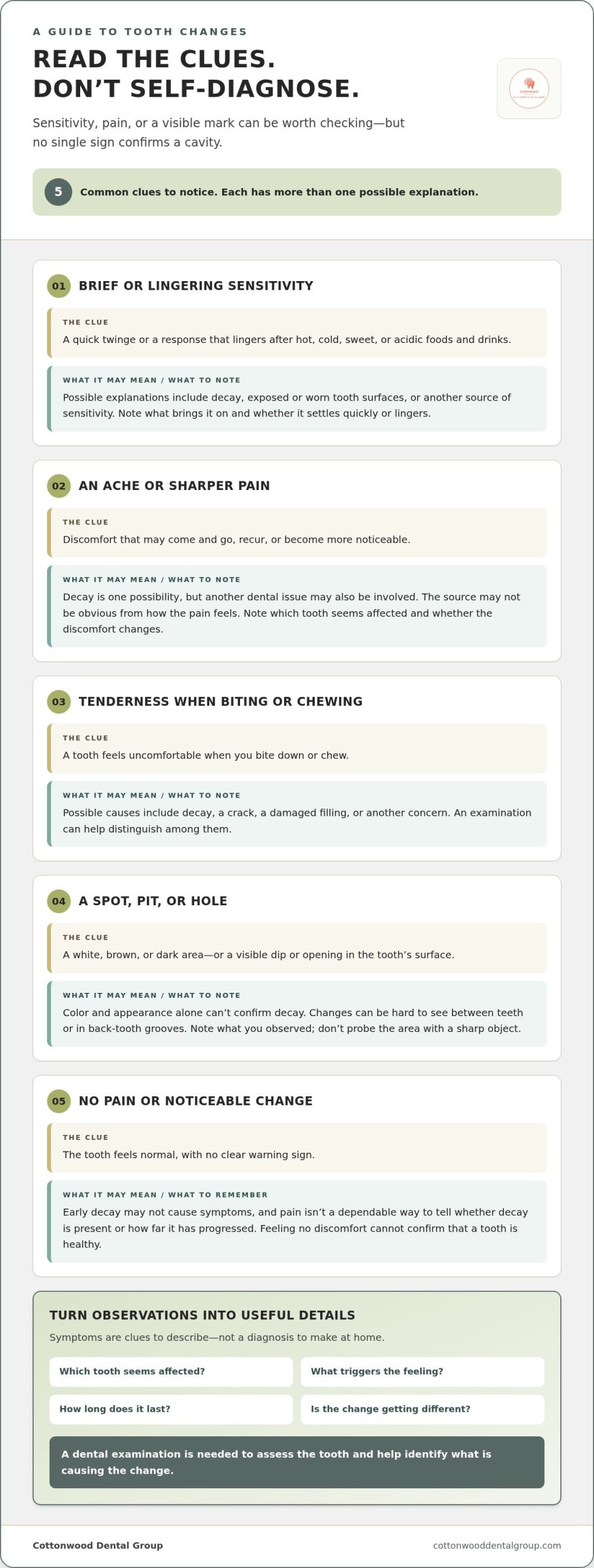
- Sensitivity: A brief or lingering response to hot, cold, sweet, or acidic foods and drinks.
- Pain: An ache or sharper discomfort that may come and go or become more noticeable.
- Discomfort when biting: Tenderness while chewing, which can have more than one possible cause.
- Spots: White, brown, or dark areas that look different from the surrounding tooth.
- Pits or holes: A visible dip or opening in the tooth’s surface.
Early decay may not cause symptoms. A tooth can need attention even if it feels normal, and pain isn’t a reliable way to judge whether decay is present or how far it may have progressed. Note any changes you see or feel, but rely on an examination for a diagnosis.
How Can a Cavity Feel?
Some people notice a quick twinge with cold water or a sweet snack; others feel a dull ache, sharper pain, or discomfort when chewing. Sensations can be mild or more pronounced and may happen only in certain situations. These patterns are useful to describe to a dentist, but no single trigger or type of pain proves that decay is the cause. Note which tooth seems affected, what brings the feeling on, and whether it settles quickly or lingers.
What Can Tooth Decay Look Like?
A tooth may develop a white, brown, or dark spot, or a visible pit or hole. Changes can be hard to see, especially between teeth or in grooves toward the back of the mouth. Color and appearance alone can’t tell you whether a mark is decay. Avoid probing it with a sharp object or trying to diagnose it yourself. Instead, note what you’ve observed and have the tooth evaluated.
Why Tooth Decay Can Develop Before You Notice Symptoms
A tooth can change before it gives you a clear signal. Decay develops gradually, and the outer surface may be affected before damage reaches areas more likely to respond with sensitivity or pain. The process varies from one tooth to another, so symptoms aren’t a dependable way to track what’s happening beneath the surface.
A symptom-free cavity is still a cavity; a tooth without symptoms isn’t necessarily cavity-free. Feeling no discomfort can be reassuring, but it can’t confirm that a tooth is healthy. Tooth decay symptoms may appear only as damage progresses. A dental examination is needed to assess the affected area.
How Plaque and Acid Affect Tooth Enamel
Plaque is a sticky film that collects on teeth and contains bacteria. When those bacteria break down sugars from food and drinks, they produce acids that can weaken enamel over time. Frequent sugary snacks or drinks can increase exposure to these acids, but they aren’t the only factors involved in tooth decay.
Think of enamel as a protective surface that faces repeated wear rather than one sudden impact. Each acid exposure can contribute to gradual mineral loss; a cavity doesn’t form instantly after a sweet snack. Enamel is the hard outer layer of the tooth. Beneath it is dentin, a layer that may be more sensitive to changes once decay reaches it.
Why Pain May Appear Later
Early changes confined to enamel may not cause a noticeable sensation. If decay progresses into dentin, a tooth may become more responsive to temperature or certain foods. Further progression can bring more persistent discomfort, but symptoms don’t follow a fixed timeline, and pain can have causes other than decay.
The same change may feel different depending on which tooth is affected, where the area sits, and the individual. A small spot between teeth, for example, may be hard to see and may not hurt, while another area could become sensitive. Only a dental examination can assess the tooth and help determine what is causing the change.
Risk isn’t explained by one habit alone. How often teeth are exposed to acids, daily cleaning, fluoride exposure, and individual circumstances can all play a part. Noticing how your teeth feel is useful, but it can’t show whether enamel has weakened or decay has reached dentin. Treat a change in sensation as a clue to discuss, not a diagnosis to make at home.
If you’re concerned about a change, a personalized evaluation can help clarify what’s going on and what next steps may be appropriate. You can arrange a dental evaluation with Cottonwood Dental Group.
Tooth Decay Symptoms or Something Else? How to Read the Clues
A twinge, toothache, or new mark can raise a fair question: could it be decay, or something else? These clues can overlap with other dental concerns, so they’re useful to describe but not reliable for self-diagnosis. Overlapping dental symptoms require an examination to identify their cause. The comparison below can help you organize what you’ve noticed, not determine what’s happening.
| Observed sign | Possible explanations | Why examination matters |
|---|---|---|
| Brief sensitivity to cold, sweets, or acidic foods | Decay, exposed or worn tooth surfaces, or other sources of sensitivity | A dentist can assess the tooth and surrounding area rather than relying on the trigger alone. |
| Ongoing or recurring toothache | Decay or another dental issue affecting the tooth | The location and source of pain may not be obvious from how it feels. |
| Pain when biting or chewing | Decay, a crack, a damaged filling, or another concern | An examination can help distinguish among possible causes. |
| Spot, pit, or rough-looking edge | Decay, staining, or a chip in the tooth | Appearance alone may not show whether tooth structure is damaged. |
Sensitivity, Toothache, and Pain When Biting
Sensitivity that appears with a particular trigger and settles afterward differs from discomfort that lingers or returns without an obvious trigger, but neither pattern confirms decay. Pain while biting also has multiple possible explanations. Before an appointment, note what brings the feeling on, how long it lasts, which tooth seems affected, and whether it’s becoming more frequent. Those details help your dentist understand the concern.
Spots, Holes, and Other Visible Changes
Discoloration may have more than one cause, and a suspected cavity can be difficult to distinguish from a chip by sight alone. A chip may change the tooth’s outline, while a cavity may appear as a pit, but appearances can overlap. Avoid probing the area. The chipped tooth repair checklist can help you think through what to notice before an assessment.
A mark at the back of a tooth or between neighboring teeth may be hard to see clearly in a mirror. Even a close look at the surface can’t reveal the full condition of the tooth. If a change persists, becomes uncomfortable, or concerns you, arrange a dental evaluation instead of waiting for the clue to become unmistakable.
Describe the change as precisely as you can: which tooth seems affected, what it looks or feels like, and whether it happens during eating, drinking, or biting. This record won’t diagnose the problem, but it can make the conversation more useful. A dentist can examine the area and explain what the findings may mean, helping you consider an appropriate next step.
What to Do If You Notice Possible Tooth Decay Symptoms
Possible tooth decay symptoms can be unsettling, but you don’t need to work out the cause on your own. A new mark or ache is a reason to pay attention, not proof of a cavity. Note what has changed and arrange an evaluation if the concern persists or gets worse.
- Note what you’ve noticed. Record which tooth seems affected, when the discomfort began, what brings it on, and how long it lasts. Include whether the pain or visible change is worsening.
- Avoid self-diagnosis. Symptoms can overlap across dental concerns, and looking at a spot or testing a tooth at home can’t reliably identify the cause.
- Arrange a dental evaluation. Share your observations so the dentist can assess the tooth and discuss appropriate next steps based on the findings.
When to Schedule a Dental Evaluation
Arrange an evaluation for new, recurring, or persistent tooth pain, sensitivity, discomfort when biting, or a visible change such as a spot or pit. You don’t have to wait for severe pain before raising a concern. Teeth without symptoms also benefit from routine professional examinations, since a developing problem may not be noticeable. An examination helps guide the conversation; it doesn’t mean a particular diagnosis or treatment is certain in advance.
Before your visit, describe the pattern clearly. Note whether discomfort happens with cold drinks, sweet foods, or chewing, and whether it settles quickly or lingers. If the change is visible, mention where it is and when you first noticed it. These details can help focus the assessment, though they can’t replace it.
When Symptoms Need Prompt Attention
Facial swelling or fever alongside a dental concern warrants prompt medical attention. Difficulty swallowing needs urgent assessment; seek emergency medical care if you have difficulty breathing or swallowing. These warning signs call for timely attention rather than waiting to see whether they resolve on their own.
Don’t rely on home measures as a substitute for assessment when symptoms are concerning, worsening, or accompanied by swelling or fever. If you’re unsure how urgently to act, describe the symptoms to a qualified medical or dental professional and follow their guidance. Clear information about how you feel and how symptoms are changing can help direct you to an appropriate next step.
For new or ongoing tooth discomfort, arrange a dental evaluation with Cottonwood Dental Group. A personalized assessment can help clarify what may be causing the change and support an informed discussion about care.
How a Dental Visit Can Clarify Tooth Decay Symptoms in Highlands Ranch
Noticing tooth decay symptoms can leave you unsure whether a spot or sensation needs attention. A dental visit shifts the focus from guessing to understanding: the dentist listens to what you’ve noticed, assesses the tooth and surrounding area, and discusses next steps based on the findings. Symptoms are important clues, but an evaluation helps put them in context.
For patients in Highlands Ranch and nearby communities, including Lone Tree and Centennial, Cottonwood Dental Group provides general and cosmetic dentistry with a concierge approach centered on personalized care. Share your concerns and questions as part of a considered conversation about your oral health.
What Happens During an Evaluation?
The visit begins with a conversation about what you’ve experienced. Describe when the discomfort started, whether it happens with certain foods or while chewing, and whether you’ve noticed a visible change. The dentist then assesses the tooth and surrounding area. This allows the discussion to be based on what’s observed, rather than on symptoms alone.
Recommendations depend on the examination findings and your individual needs. A spot or sensitive tooth doesn’t automatically point to one diagnosis or treatment. Your dentist can explain what the assessment indicates and answer questions before you consider appropriate next steps.
Discussing Treatment and Comfort
Once the tooth has been assessed, the dentist can talk through suitable care options and what each may involve. If a tooth needs restoration, a dental crown may be one option when clinically appropriate. The recommendation depends on the condition of the tooth, so treatment shouldn’t be assumed before an examination.
It’s also reasonable to mention dental anxiety or concerns about comfort. Sharing what feels difficult can help guide a supportive conversation about your visit. Cottonwood Dental Group offers sedation dentistry for patients who want to discuss comfort options during dental care.
A personalized evaluation can offer clarity even if you’re not sure how to describe the change. Cottonwood Dental Group serves Highlands Ranch, Lone Tree, Centennial, Castle Pines, and Parker, with general and cosmetic care tailored to individual needs. If you’ve noticed a persistent change or have questions about a tooth, arrange an evaluation with the practice to discuss what may be happening and a thoughtful path forward.
Take the Next Step With Confidence
You don’t need to be certain that a tooth has decay before asking about a change. If something feels different, it’s reasonable to seek clarity rather than spend time wondering what the tooth decay symptoms might mean. A professional conversation can help you understand what deserves attention, based on an evaluation rather than guesswork.
Before your visit, consider what you’d most like answered. Is the discomfort affecting eating, making you hesitant to drink something cold, or worrying you because of a visible change? Sharing your concern in your own words is enough to begin a useful discussion. You can also mention any anxiety about dental visits so your needs are part of the conversation.
When you’re ready, schedule a personalized dental evaluation with Cottonwood Dental Group. The practice’s concierge-style approach supports attentive, individualized care, with general and cosmetic dentistry in Highlands Ranch and nearby communities. Taking that first step can replace uncertainty with a clearer plan and help you make informed decisions about your oral health.
Frequently Asked Questions
Can tooth decay cause bad breath?
Yes, tooth decay may contribute to an unpleasant taste or odor, especially if food and bacteria collect around a damaged area. But bad breath also has other possible causes, such as dry mouth, gum concerns, or oral hygiene habits. Odor alone can’t confirm a cavity. If it persists, or you also notice tooth pain or a visible change, arrange a dental evaluation to identify the cause.
Can a cavity heal on its own?
A cavity that has formed a hole in the tooth doesn’t simply grow back or repair itself. Early enamel changes may be managed differently from a cavity that has progressed, but a dental professional needs to assess the tooth to determine what care is appropriate. Don’t assume decay is gone just because discomfort improves. A dentist can explain the findings and discuss suitable next steps.
Can tooth decay symptoms come and go?
Yes, tooth decay symptoms can be intermittent or appear only with certain foods, temperatures, or pressure. For example, discomfort might occur while drinking something cold but not during other parts of the day. A symptom-free stretch doesn’t establish that the cause has resolved, and similar sensations can have different explanations. Note what triggers the feeling and how long it lasts, then share those details during an evaluation.
Is tooth decay contagious?
Tooth decay is damage to a tooth, not an illness that spreads through ordinary contact. Bacteria associated with cavities can be shared between people, but exposure doesn’t mean someone will automatically develop decay. Factors such as oral hygiene, diet, and saliva also matter. There’s no need to avoid normal family contact; focus instead on consistent oral care and routine dental guidance for your individual needs.
Can you have tooth decay under a dental filling?
A tooth with a filling can develop a new problem, including decay near the restoration. New sensitivity, pain, or a change around the filling deserves professional assessment, but those signs can’t tell you by themselves what’s happening. Avoid trying to test or probe the filling. A dentist can evaluate the tooth and explain whether any care is needed, especially if the change affects chewing or daily comfort.
Does tooth decay always look dark?
No. A decayed area may look white, brown, or dark, and some changes can be difficult to see without professional assessment. A dark mark doesn’t automatically mean decay, while a tooth that looks normal may still have an early problem. If you notice a new mark, hole, or texture change, describe what you’ve seen to your dentist rather than using color alone to judge the tooth.
