
October 8, 2026

A personalized smile makeover doesn’t have to mean changing everything. It starts with your goals, oral health, and comfort, then focuses on the options that fit your priorities. You may be wondering which concerns cosmetic dentistry can address, or how to compare treatments with different purposes and trade-offs.
This guide explains treatment categories that may be considered and how they can fit into a plan. Depending on your needs, options may include teeth whitening, porcelain veneers, or clear tray orthodontics. Dental crowns, implants, or cosmetic dentures may be considered when care also needs to address damaged or missing teeth. The right combination depends on an individual assessment, not a one-size-fits-all formula.
We’ll cover how planning accounts for oral health, appearance, and personal preferences, and suggest practical questions to bring to your dental team. Cottonwood Dental Group offers personalized cosmetic and general dentistry in Highlands Ranch, serving patients from nearby communities including Lone Tree, Centennial, Castle Pines, and Parker.
Key Takeaways
- A personalized smile makeover can involve one treatment or a coordinated plan, shaped by your concerns, oral health, and preferences.
- Planning starts by discussing your goals and assessing oral health before weighing elective cosmetic options.
- Compare treatment categories by the concern they address, their limitations, and what influences suitability.
- A smile makeover doesn’t have to involve multiple procedures or a dramatic change. You can focus on one priority.
- Cottonwood Dental Group offers personalized smile planning in Highlands Ranch for patients in nearby communities.
What Does a Personalized Smile Makeover Include?
A personalized smile makeover is a plan shaped around the concerns you want to address, your oral health, and the changes that feel right to you. It may involve one treatment or a combination of cosmetic and restorative care, depending on your goals and clinical needs. Instead of choosing a procedure because it is popular or resembles a photo, start by identifying what you want to change and discussing which options fit your smile.
A personalized smile makeover balances your goals with what an examination shows is suitable for your teeth and oral health. A photo can help you describe a preferred look, but it cannot determine whether a treatment is appropriate for your teeth. Cosmetic dentistry includes different approaches, so a useful first step is to connect a specific concern with relevant options and discuss their suitability with your dental team.
Which smile concerns can a makeover plan address?
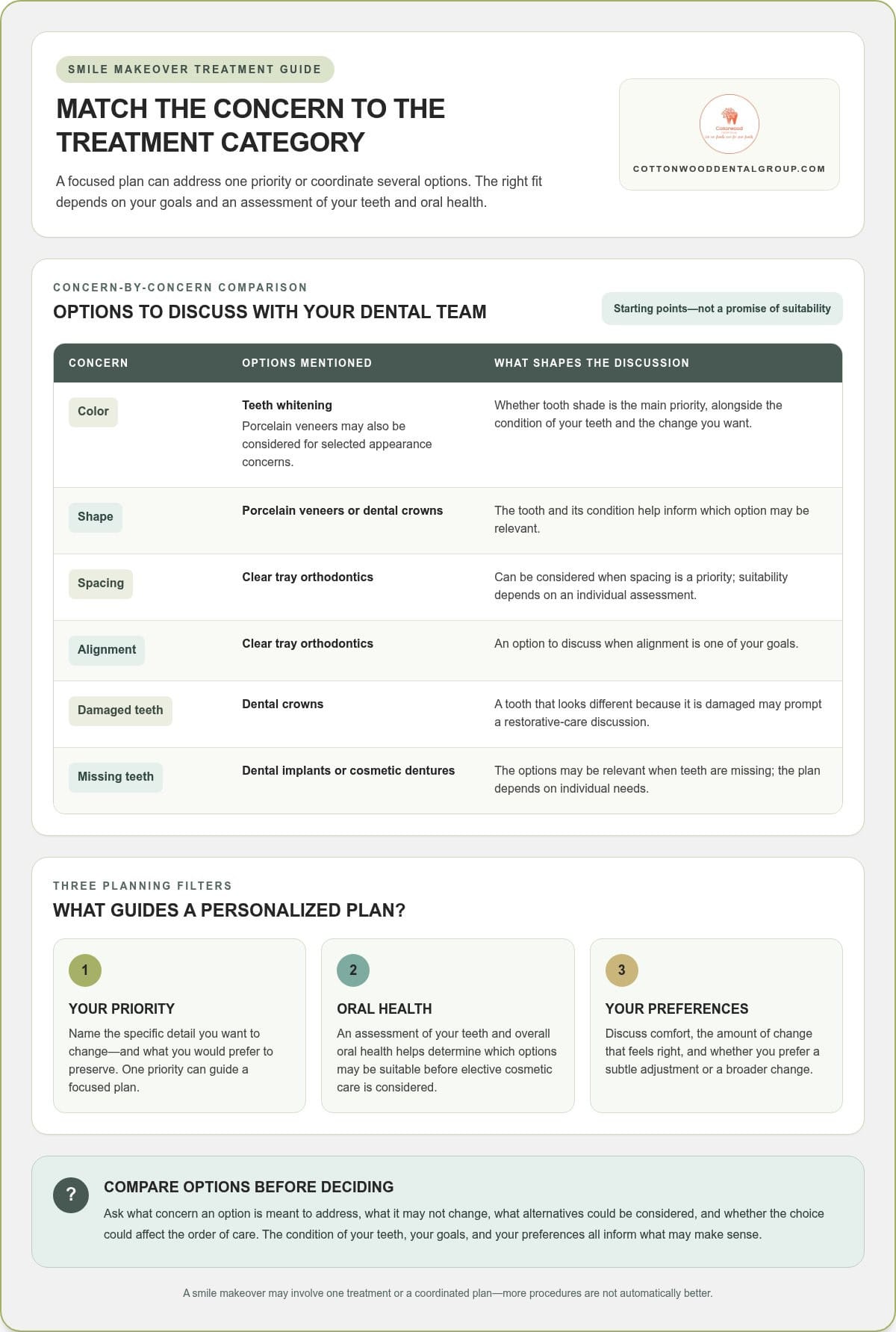
Name the specific detail you would like to change. You do not need to pursue every possible adjustment; one priority can guide a focused plan. These treatment categories can help you prepare for a conversation:
- Color: Teeth whitening may be discussed when shade is the main concern. Porcelain veneers may be considered for selected appearance concerns.
- Shape: Porcelain veneers or dental crowns may be relevant, depending on the tooth and its condition.
- Spacing: Clear tray orthodontics may be considered when spacing is a priority.
- Alignment: Clear tray orthodontics can be discussed as an option for alignment goals.
- Damaged or missing teeth: Dental crowns may be considered for damaged teeth. Dental implants or cosmetic dentures may be relevant when teeth are missing.
These categories are starting points, not a promise that a specific treatment will suit every case. The condition of your teeth and gums, your goals, and the type of change you want all inform what may make sense.
How personal preferences shape the plan
Consider what you want to preserve as well as what you hope to change. You might want a brighter shade while keeping the familiar character of your smile, or you may want to discuss alignment while keeping the overall result subtle.
Share your comfort preferences, too. Explain what kinds of changes feel manageable and what would feel like too much. A thoughtful plan takes those preferences into account rather than assuming that a more extensive transformation is better.
Your facial features and existing teeth also inform the discussion. Tooth shape, proportions, and how your smile fits your face can help guide the conversation about a natural-looking direction. These considerations belong alongside oral health, so personal taste informs the plan without replacing clinical judgment. Bring a clear priority and describe the outcome you hope for, whether that means a small adjustment or a broader change.
How Is a Personalized Smile Makeover Planned?
A clear planning process turns a general goal, such as “I’d like my smile to look brighter,” into a focused discussion about possible care. Start by describing your goals, then have your oral health assessed, review suitable options, and decide which priorities matter most. You can ask questions and revisit your choices as you learn more. The plan should make sense to you, not just look complete on paper.
Start with goals and a dental assessment
Before your discussion, note what you would most like to change and what you would prefer to keep. If a reference image helps you describe a shade or overall look, bring it as a conversation aid, not a template. Your dentist will consider the condition of your teeth and your overall oral health before discussing elective cosmetic care.
Oral health comes first because cosmetic choices should fit the condition and needs of your teeth. An assessment helps distinguish a preferred appearance change from a concern that may need restorative attention. For example, a tooth that looks different because it is damaged may prompt a different discussion from a healthy tooth whose color is your main concern. The assessment provides context for your options; it does not obligate you to pursue every treatment discussed.
Prioritize options and build a phased plan
Once your goals and dental needs are understood, compare options in practical terms. Discuss what each treatment is intended to address, what it may not change, and how well it fits your preferences. Useful questions include: Which concern is this option meant to address? What alternatives could be considered? Could this choice affect the order of care?
Then sort your priorities. Is there a dental need to address first? Which appearance change matters most to you? Which ideas can wait? Separating dental needs from preferred cosmetic changes helps you consider both without treating every concern at once.
The sequence is individual. Some plans focus on one treatment; others involve coordinated steps. Your dentist can explain why a particular order is being considered and how it relates to your oral health and goals. Before moving forward, make sure you understand the proposed direction and have a chance to raise questions about appearance, comfort, or scope.
For more on the considerations behind smile transformations, explore this guide to smile transformations. Patients in Highlands Ranch, Lone Tree, Centennial, Castle Pines, and Parker can also learn more about Cottonwood Dental Group and its personalized dental care.
Which Smile Makeover Treatments Address Different Goals?
Different concerns call for different conversations. A change in shade, tooth shape, alignment, or a missing tooth may point to a different treatment category. Use the comparison below to prepare questions, not as a diagnosis or prescription. Suitability depends on an examination and a discussion of your priorities, oral health, and comfort.
| Concern | Treatment category to discuss | Planning consideration |
|---|---|---|
| Tooth color | Teeth whitening; porcelain veneers for selected appearance concerns | Describe the color change you want and whether the concern involves shade alone or other features of the tooth. |
| Tooth shape or appearance | Porcelain veneers; dental crowns in certain cases | Consider the tooth’s condition and whether the goal is primarily cosmetic or also involves restoring a damaged tooth. |
| Alignment | Clear tray orthodontics | Discuss your alignment goals and how orthodontic care fits your overall dental plan. |
| Damaged tooth | Dental crowns | The extent and nature of the damage inform whether restorative care is part of the plan. |
| Missing tooth or teeth | Dental implants or cosmetic dentures | Discuss your needs and preferences for addressing the space as part of broader restorative planning. |
Cosmetic options for color, shape, and alignment
For a color concern, teeth whitening is one option to discuss. If you are considering a change to a tooth’s appearance, porcelain veneers may be relevant for selected concerns involving shape or overall appearance. Cottonwood Dental Group offers porcelain veneers, and this guide to porcelain veneers provides more information about the treatment category. Clear tray orthodontics may be part of a conversation about alignment. These approaches address different goals, so compare options that fit your specific concern rather than looking for a universal ranking.
Restorative options for damaged or missing teeth
Some smile planning involves more than appearance. A dental crown may be considered for certain damaged teeth, while dental implants or cosmetic dentures may be discussed when teeth are missing. Cottonwood Dental Group offers these restorative options as part of its dental care. Their role in your plan depends on your individual clinical needs and preferences. A personalized smile makeover may involve one treatment or several coordinated categories, so clarify what each option is intended to address before deciding on a direction.
To make the discussion useful, describe the outcome you are hoping for and ask how each proposed option relates to that goal. You can also ask about limitations and whether another category may better fit your priorities. This helps you weigh the appearance you have in mind alongside the needs of your teeth.
Is a Smile Makeover Too Extensive or Only About Appearance?
A smile makeover does not have to mean several procedures or a dramatic change. Its scope can be limited to one concern, and planning can account for oral health, function, comfort, and the appearance you prefer. You can set boundaries. A useful discussion clarifies which changes matter to you, what care may be needed for dental health, and what alternatives or pacing could make the plan feel appropriate.
Can a makeover be subtle or limited to one concern?
Yes. The scope depends on your goals and clinical assessment. You might focus on tooth color, discuss alignment as a single priority, or ask about a damaged tooth that affects your smile. These are examples of possible starting points, not recommendations for every patient. Your dental team can explain what may be suitable for your teeth and whether a focused plan addresses your main concern.
A limited approach does not mean settling for a look that feels unlike you. It means defining what “enough” looks like in your own terms. You may want a subtle change that preserves familiar features, or prefer to address a functional concern before considering cosmetic care. A personalized smile makeover can be planned around those preferences instead of assuming that more treatment is always better.
How to weigh benefits, limitations, and trade-offs
Each treatment has a different purpose, so options are not interchangeable. As you compare them, consider the concern each is intended to address, its limitations, how it may fit into a sequence of care, and what maintenance may involve. Comfort matters, too. If a proposed step feels like more than you want, say so and discuss alternatives or a different pace.
It can help to sort your questions into three groups: what you hope to change, what your dentist recommends for your oral health, and what you are comfortable pursuing. Then ask how those priorities fit together. A tooth-color concern, for example, calls for a different discussion than a damaged tooth, even if both affect how your smile looks. Understanding the purpose of each option helps you weigh its possible benefits alongside its trade-offs.
If tooth shade is your main priority, comparing professional teeth whitening and at-home bleaching gels can help you prepare questions about different approaches. Use the comparison as a starting point for discussion, not a substitute for advice tailored to your teeth.
You do not need to agree to a broad plan before you understand it. Ask what each step is meant to accomplish, which parts address dental needs, and whether the sequence can be adjusted around your preferences and comfort. You can learn more about Cottonwood Dental Group’s dental care as you consider your options.
Plan Your Smile Makeover with Cottonwood Dental Group
A useful smile conversation starts with your priorities, not a predetermined set of procedures. Cottonwood Dental Group’s concierge-style approach gives you room to describe what you hope to change, what you would like to preserve, and any concerns about comfort or treatment scope. You can then review relevant options and consider a plan guided by your goals and oral health. You do not need to arrive with a finished decision.
What to bring to a smile makeover conversation
A little preparation can help you explain what matters most. Write down your main concerns and bring reference photos if they help you describe a look you like. Treat images as discussion aids, not templates for a promised outcome. Your teeth, features, and clinical needs all inform the conversation.
- Your priorities: Identify the one or two changes you are most interested in discussing.
- What you want to preserve: Note features of your smile that feel like you and that you would prefer to keep.
- Your comfort considerations: Share any concerns about treatment, the scope of care, or making several changes.
- Your questions: Ask what each option is intended to address, what alternatives may be considered, and how oral health shapes the plan.
It is also helpful to say whether you are hoping for a subtle change or are open to discussing broader possibilities. Being clear about your preferences keeps the conversation focused on what feels appropriate to you, rather than assuming that a more extensive plan is the goal.
Take a comfortable next step in Highlands Ranch
Cottonwood Dental Group provides personalized dental care in Highlands Ranch. Patients from Lone Tree, Centennial, Castle Pines, and Parker can bring their questions and discuss options in a planning conversation. You can review cosmetic and restorative categories together, clarify what each may address, and decide which next step fits your priorities.
A personalized smile makeover does not require you to commit to every possibility at once. A conversation can help you understand the options, raise questions about comfort or scope, and consider a tailored plan at a pace that feels manageable. Before your visit, note what you would like to ask about each treatment’s purpose, limitations, and place in your care.
When you are ready to discuss your priorities, schedule a smile makeover conversation with Cottonwood Dental Group. A thoughtful first discussion can help turn broad ideas into a clear, patient-centered path forward.
Move Forward with Clarity and Confidence
You do not need to arrive with a complete picture of your future smile. A short list of hopes, hesitations, and questions is enough to begin a useful conversation. Your ideas can become clearer as you discuss what matters and how your preferences relate to your oral health. A personalized smile makeover is not about making every possible change; it is about exploring an appropriate direction that feels considered and true to you.
If you are still weighing your options, that is a valid place to start. Take time to understand the choices, discuss what matters most, and decide on next steps without feeling that you need every answer in advance.
When you are ready, schedule a conversation about your smile goals with Cottonwood Dental Group in Highlands Ranch. Patients from Lone Tree, Centennial, Castle Pines, and Parker are welcome to discuss a personalized plan.
Frequently Asked Questions
Is a personalized smile makeover right for everyone?
Not necessarily. A personalized smile makeover is not one standard procedure, and suitability depends on your goals, oral health, and the condition of your teeth. An assessment can help identify which options may fit and whether another dental need should be addressed first. You might decide to focus on one feature rather than consider several changes. The right direction reflects both clinical guidance and what matters to you.
Can I get a smile makeover with just one treatment?
Yes. A plan can focus on one concern, such as tooth shade or alignment, rather than combining procedures. The key is choosing an option that suits both your goal and your dental needs. Ask what the treatment is intended to address, what it may not change, and whether other approaches could be considered. You can have a useful smile-planning conversation without deciding to pursue every cosmetic option.
How long does a personalized smile makeover take?
The timeline depends on the treatments involved, their sequence, and your individual needs. A plan focused on one procedure may differ from one with several steps, so a general online estimate cannot reliably predict your schedule. During planning, ask which steps need to come first, what factors could affect timing, and when your dentist can provide an estimate based on your assessment and proposed care.
Does dental insurance cover a personalized smile makeover?
Coverage varies by insurance plan and by the purpose of each proposed procedure. A plan may treat a procedure differently if it addresses a dental health need rather than appearance alone, but coverage depends on the policy’s terms. Review your benefits for each treatment under consideration and ask your insurer how they apply. Do not assume the entire makeover will be covered or excluded based on one procedure.
Will a smile makeover look natural?
A natural appearance is a common goal, but no general description can guarantee how a treatment will look for you. Explain what “natural” means in your case. You may want to preserve your usual tooth shape, avoid a noticeably brighter shade, or make only a subtle change. Your dentist can discuss how your features and existing teeth inform the options and clarify what each approach may realistically address.
Are porcelain veneers permanent?
Porcelain veneers should be considered a significant dental commitment, not a temporary cosmetic accessory. Depending on the case and procedure, placing veneers may involve changes to natural tooth structure, so ask your dentist whether treatment is reversible and what ongoing care may involve. Discuss alternatives, expected maintenance, and how veneers fit your goals before deciding. The details for your teeth matter more than a broad description of the procedure.
Can a smile makeover include treatment for missing teeth?
Yes, smile planning can include missing teeth. Cottonwood Dental Group offers dental implants and cosmetic dentures, though the appropriate approach depends on your oral health, preferences, and individual assessment. Patients in Highlands Ranch, Lone Tree, Centennial, Castle Pines, and Parker can discuss how restoring a missing tooth may fit into broader dental goals.
