
September 15, 2026

You’ve just walked out of your appointment with a refreshed smile, but you’re suddenly faced with a high-stakes afternoon meeting and a lip that refuses to cooperate. It’s a frustrating hurdle when you need to speak clearly or simply want to enjoy a meal without the fear of accidentally biting your cheek. If you’re wondering how to get rid of numbness after dentist visits, you aren’t alone. Most patients feel a sense of relief when their treatment is finished, only to be met with the lingering inconvenience of a face that feels heavy and unresponsive.
At Cottonwood Dental Group, we believe a premium patient experience includes a smooth transition back to your daily life. We understand the discomfort of waiting hours for sensation to return and the worry of spilling a drink during a professional lunch. This guide shares five safe, expert-backed ways to help that frozen feeling fade away faster. We’ll explore effective home remedies and clinical solutions like OraVerse, which can reduce recovery time by over 80 minutes. You will learn how to safely stimulate blood flow and recognize when a lingering tingle might require a quick call to our office.
Key Takeaways
- Discover practical strategies for how to get rid of numbness after dentist visits by safely increasing circulation to help your body metabolize anesthesia faster.
- Learn why protecting your lips and cheeks from accidental biting is the most critical step to take while waiting for sensation to return.
- Explore the benefits of professional reversal agents that can significantly reduce the duration of soft-tissue numbness following your procedure.
- Understand how the location of your treatment affects recovery time and why certain areas of the mouth remain numb longer than others.
- See how a personalized, concierge approach to dentistry ensures your comfort continues long after you leave the clinical setting.
Understanding Dental Anesthesia: Why the Numbness Persists
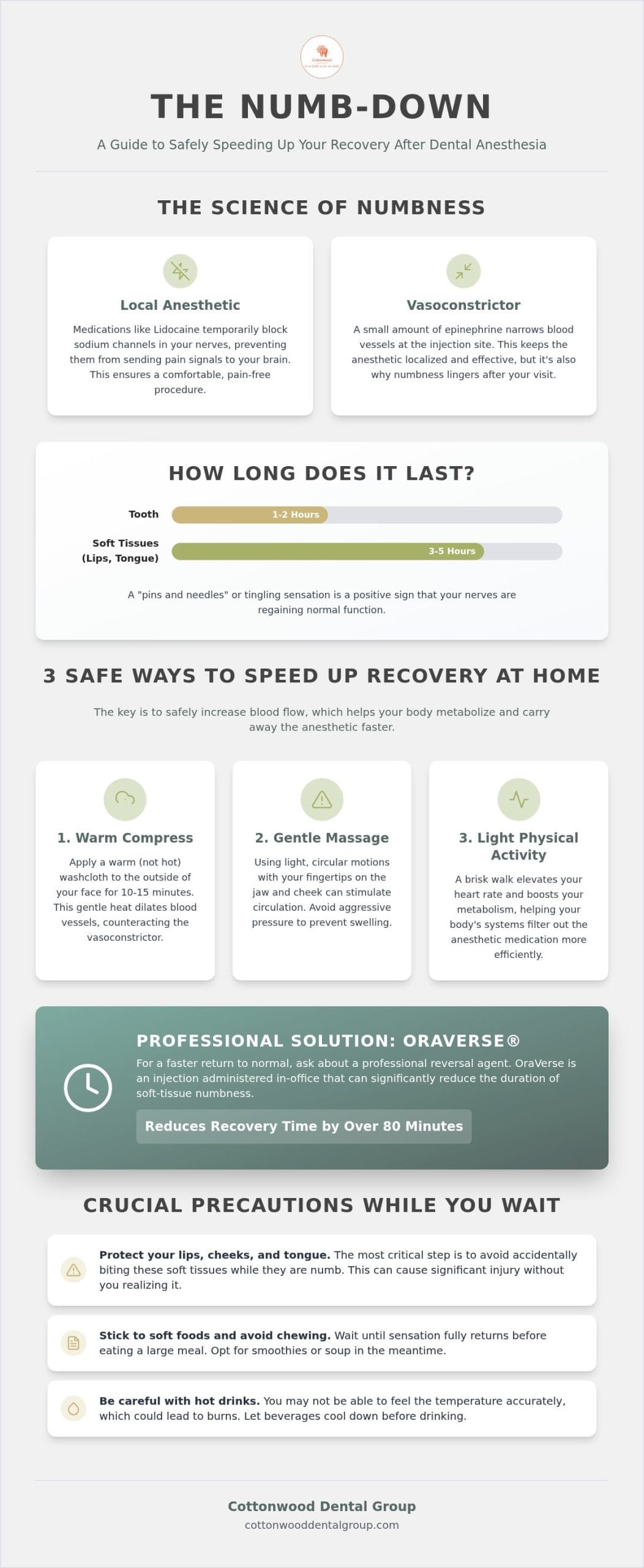
Local anesthetics are the cornerstone of modern dental anesthesia, allowing us to perform complex procedures with total precision and patient comfort. Medications such as Lidocaine or Septocaine work by temporarily blocking the sodium channels in your nerve cells. Since sodium is required to send electrical impulses, the nerve simply cannot transmit pain signals to your brain while the drug is present. This interruption is what makes your treatment anxiety-free and painless.
Most local anesthetics also contain a small amount of epinephrine. This ingredient acts as a vasoconstrictor, narrowing the blood vessels around the injection site to keep the numbing agent localized and effective. While this ensures you don’t feel discomfort during your treatment, it’s also the primary reason you might spend your afternoon wondering how to get rid of numbness after dentist visits. The medicine stays put until your blood flow eventually carries it away to be metabolized by your system.
The metabolic process is measured by the drug’s half-life. In the context of your recovery, a half-life is the specific amount of time it takes for your body to process and eliminate half of the anesthetic dose from your bloodstream.
Common Types of Local Anesthesia
Not all numbing experiences are the same. We often use “infiltration” for the upper jaw, where the bone is more porous and the medicine stays near the specific tooth being treated. For the lower jaw, we typically perform a mandibular nerve block. This targets a main nerve trunk, which is why your entire lip, chin, and half of your tongue might feel heavy for several hours. If you are looking for how to get rid of numbness after dentist appointments, it helps to realize that your individual metabolism also plays a role; some patients naturally process these medications faster than others based on their unique biology.
Expected Duration of Numbness
You can generally expect the profound numbness in the tooth itself to last about one to two hours. However, the soft tissues like your lips and tongue often take much longer to recover, sometimes remaining numb for three to five hours. This timeline depends on the specific anesthetic used and the concentration of vasoconstrictors included in the formula. As the medication begins to wear off, you might experience a “pins and needles” tingling sensation. This is a positive sign that your nerves are regaining their normal function and your natural sensation is returning.
5 Safe Ways to Get Rid of Numbness Faster at Home
Waiting for sensation to return can feel like an eternity, especially when you have a busy schedule ahead of you. While your body naturally processes the medication, you can gently nudge the process along by focusing on circulation and supporting your body’s innate recovery systems. The secret to how to get rid of numbness after dentist visits lies in your blood flow, a concept that aligns with the holistic health philosophies championed by Dr.Vaishali Nore’s Homeopathy & Wellness Clinic. Since the anesthetic is held in place by vasoconstrictors, your primary objective is to safely encourage blood movement to carry the medication away for processing.
One of the most effective ways to encourage blood flow is by applying a warm compress to the outside of your face. Use a washcloth soaked in warm water, ensuring it’s comfortable to the touch rather than hot. Apply it to the numb area for 10 to 15 minutes. This gentle heat helps dilate the local blood vessels, counteracting the effects of the epinephrine used during your treatment.
In addition to heat, a very gentle massage of the jaw and cheek area can be beneficial. Using light, circular motions with your fingertips can stimulate lymphatic drainage and encourage fresh blood to enter the tissues. We recommend being careful not to use excessive heat or aggressive pressure, as this could lead to unnecessary swelling or discomfort. If you find the entire process of dental work stressful, exploring sedation dentistry in Highlands Ranch can help you stay relaxed from the moment you arrive until the numbness eventually fades.
Physical Activity and Metabolism
Your systemic circulation also plays a major role in how quickly you “thaw out” after a procedure. A brisk walk around the block or some light movement can elevate your heart rate just enough to stimulate your metabolism. When your heart beats faster, your blood moves more efficiently through the liver and kidneys, which are responsible for filtering out the anesthetic components.
Understanding how long dental anesthetics last often depends on your activity level and hydration. Drinking plenty of water helps your kidneys excrete the broken-down medication more effectively. Just remember to avoid vigorous exercise if you’ve had a tooth extraction or major oral surgery. High-intensity workouts can increase the risk of bleeding or dislodging a blood clot, so always check with Dr. Parsons if you’re unsure about your post-operative activity limits. Focusing on these gentle, safe methods ensures you return to your day with comfort and confidence.
Crucial Precautions While You Wait for Numbness to Fade
Protecting your mouth while it remains in a “frozen” state is just as important as the clinical procedure itself. While you may be eager to learn how to get rid of numbness after dentist treatments, your primary focus should be on safety during the transition. Because local anesthesia blocks all sensory input, you lose the ability to feel pain, pressure, or temperature. This lack of feedback can lead to accidental injuries that may require additional care once the sensation finally returns.
We recommend avoiding any strenuous chewing until you have full control over your facial muscles. If you must eat, choose a “Safe Foods” checklist to minimize the risk of mechanical injury:
- Greek yogurt or chilled applesauce
- Smoothies (poured into a glass, not through a straw)
- Mashed avocados or lukewarm mashed potatoes
- Protein shakes or room-temperature broth
Avoiding Self-Inflicted Injury
The most common post-operative complication is a “traumatic bite” to the lip, cheek, or tongue. You might accidentally pinch your soft tissue between your teeth without realizing it. We suggest performing a “mirror check” if you need to speak or swallow. Looking in the mirror helps you visually confirm that your lips and cheeks are clear of your teeth.
Children are at a particularly high risk for these injuries. They often find the tingling sensation fascinating and may intentionally chew on their lip just to see what it feels like. This can result in significant swelling and ulceration the next day. If an accidental bite does occur, rinse the area with a gentle salt-water solution to keep it clean while the tissue heals.
Temperature Sensitivity Risks
Thermal burns are a hidden danger when you are numb. A cup of coffee or a bowl of soup that feels “just right” to your hand can be hot enough to blister the delicate lining of your mouth. Since your nerves cannot signal a burn, you might not realize the damage until the anesthesia wears off hours later.
Follow the “Room Temp Rule” for at least three hours following your appointment. Always test the temperature of any liquid on the back of your hand first. If it feels even slightly hot to your skin, it is far too hot for your numb mouth. Testing food on a non-numb part of your palate can also provide a safety baseline. By staying vigilant for just a few hours, you ensure your recovery remains as comfortable as the treatment we provided in our office.
Professional Solutions: Can Your Dentist Reverse the Numbing?
While the home remedies we discussed previously are effective for gentle stimulation, they may not be fast enough for a busy professional. If you are looking for how to get rid of numbness after dentist visits as quickly as possible, clinical reversal agents offer the most direct solution. OraVerse is currently the only FDA-approved product designed to accelerate the return of sensation in your lips and tongue. This pharmaceutical approach is a hallmark of a practice that considers your post-operative comfort as much as the procedure itself.
How OraVerse Works
Modern local anesthetics often include epinephrine to keep the numbing effect localized for as long as possible. OraVerse, known clinically as phentolamine mesylate, acts as the direct counterpart to that process. Phentolamine mesylate is a vasodilator that increases local blood flow to help carry the anesthetic away from the injection site. By opening those blood vessels back up, your body can begin the natural process of metabolism much sooner than it would on its own.
The clinical results are significant for those with tight schedules. Clinical trials have demonstrated that this reversal agent can reduce the median recovery time for the upper lip by 83 minutes and the lower lip by 85 minutes. Instead of the typical wait of two or three hours, many patients regain full sensation in 50 to 70 minutes. We administer the treatment through an injection in the exact same location as your original numbing agent, usually right as your procedure concludes. Since the area is already numb, you won’t feel the additional administration.
When to Ask Your Dentist for a Reversal Agent
This professional solution is an excellent choice for patients with high-stakes afternoons. If you have a critical meeting, a public speaking commitment, or simply want to avoid the risk of spilling a drink during a professional lunch, a reversal agent provides peace of mind. It is also a valuable tool for patients who experience sensory discomfort or anxiety from the “frozen” feeling. Our boutique approach ensures that we discuss these options with you before your treatment begins, allowing us to tailor the recovery to your specific needs.
Safety is always our priority. OraVerse is approved for use in adults and children aged six and older who weigh at least 33 pounds. Because this is often categorized as an optional dental service, it may not be covered by all insurance providers. However, for many of our guests, the ability to return to their day with confidence is a worthwhile investment in their convenience. If you prefer to avoid a second injection, you can still rely on the circulation-boosting techniques we’ve shared. If you are ready for a higher standard of clinical care, reach out to Cottonwood Dental Group to learn more about our personalized treatment options.
Comfortable Dental Care in Highlands Ranch: The Cottonwood Experience
At Cottonwood Dental Group, we believe that the highest standard of care doesn’t end when the dental chair is reclined back to its upright position. Our boutique practice in Highlands Ranch is built on a concierge model where every detail of your visit is meticulously planned. This includes a strategic approach to how to get rid of numbness after dentist visits by focusing on precision from the very first minute of your appointment. Dr. Parsons utilizes advanced techniques to ensure that anesthesia is administered with exactness, targeting only the necessary nerves to minimize the “frozen” sensation in surrounding tissues.
Personalized Care in Highlands Ranch
Every patient has a unique metabolic profile, which is why we don’t believe in a one-size-fits-all approach to local anesthesia. By tailoring the type and volume of medication to your specific needs, we can often reduce the duration of post-operative numbness. For those who experience dental anxiety, we offer sedation dentistry Highlands Ranch patients can rely on for a calm, relaxed experience. This personalized methodology ensures that your recovery is as predictable and comfortable as possible. Our commitment to excellence serves families throughout Highlands Ranch, Lone Tree, and Centennial, providing a modern healthcare environment that feels like a cornerstone of the community.
Next Steps for Your Recovery
While the tips and professional solutions mentioned earlier are designed to help you return to your day, it’s essential to listen to your body. Most local anesthesia will fully dissipate within three to five hours. If you find that your numbness persists for longer than six to eight hours, or if you experience unexpected swelling, we encourage you to contact our office immediately. If you’re still concerned about how to get rid of numbness after dentist appointments or notice a lack of progress in your sensation, our team is just a phone call away. Our concierge approach means we are here to provide personalized follow-up and clear post-operative instructions to ensure your peace of mind.
Do you still have questions about your upcoming procedure? You can find more detailed information in our Sedation FAQ regarding what to expect after your visit. We invite you to experience a higher level of dental care where your comfort is our primary metric of success. Schedule your next comfortable visit with Cottonwood Dental Group today and discover the difference that a patient-centric, expert guide can make in your oral health journey.
Return to Your Day with Confidence
Navigating the hours following a dental procedure doesn’t have to be a waiting game. By understanding that blood flow is the primary mechanism for clearing anesthesia, you can take active steps to speed up your recovery. Whether you choose gentle at-home methods like a warm compress and light walking or opt for professional reversal agents like OraVerse, the goal is to return to your normal routine safely. Remember to prioritize caution with hot beverages and solid foods until your sensation has fully returned. Knowing how to get rid of numbness after dentist visits empowers you to manage your post-op experience with ease.
At Cottonwood Dental Group, we are dedicated to providing a boutique experience that prioritizes your comfort at every stage. Led by Dr. Parsons, a trusted Highlands Ranch expert, our practice offers a patient-centric environment specialized in anxiety-free sedation dentistry. We believe that premium care involves meticulous attention to your transition back to daily life. Experience Concierge Dental Care at Cottonwood Dental Group and see how a personalized touch can transform your oral health journey. We look forward to supporting your healthy, vibrant smile.
Frequently Asked Questions
How long does dental numbing typically last after a procedure?
Dental numbing typically lasts between two and five hours for soft tissues like your lips and tongue. While the profound numbness in the tooth itself often fades within one to two hours, the surrounding areas take longer to process the medication. Factors such as the specific anesthetic used and your own metabolic rate will influence this timeline. If you’re curious about how to get rid of numbness after dentist visits, remember that lower jaw procedures usually stay numb longer.
Is it safe to sleep while my mouth is still numb from the dentist?
It’s generally safe to sleep while numb, but you should take precautions to avoid self-inflicted injury. The primary risk is accidentally biting your cheek or tongue while you’re unconscious and unable to feel pain. If you must rest, try to stay slightly elevated with extra pillows to encourage natural drainage. Our Highlands Ranch patients often find that a short nap is fine as long as they aren’t prone to heavy grinding or clenching during sleep.
Can I drink coffee or tea while my lip is still numb?
You should avoid hot coffee or tea until the sensation in your mouth has completely returned. Because your nerves aren’t sending temperature signals, you could suffer a significant thermal burn without realizing it. If you need a drink, stick to room-temperature water or lukewarm beverages. Always test the liquid on the back of your hand first to ensure it’s safe for your delicate oral tissues during this vulnerable recovery period after your visit.
What happens if the numbness doesn’t go away after 24 hours?
If your numbness persists for more than 24 hours, you should contact Cottonwood Dental Group immediately. While rare, lingering numbness can indicate nerve irritation or a condition called paresthesia. Dr. Parsons will want to evaluate the site to ensure your recovery is progressing correctly. Most cases of extended numbness are temporary, but professional guidance is essential to rule out complications and provide you with a clear path forward for your healing and comfort.
Are there any foods I should avoid while I’m still numb?
Avoid hard, crunchy, or very hot foods until the “frozen” feeling wears off. Items like chips, nuts, or crusty bread increase the risk of you accidentally biting your cheek or tongue. We recommend sticking to soft, room-temperature options like yogurt, smoothies, or applesauce. Taking these precautions helps prevent mechanical injuries that you won’t be able to feel until the anesthesia has fully metabolized and your natural sensation returns to your lips and jaw.
Can exercise really help the numbness wear off faster?
Light exercise can indeed help the numbness wear off faster by increasing your systemic circulation. A brisk walk through your Highlands Ranch neighborhood stimulates your heart rate, which helps your liver and kidneys process the anesthetic more efficiently. When your blood moves faster, it carries the medication away from the injection site more quickly. Just be sure to avoid high-intensity workouts if you’ve had a major procedure like a dental implant or a tooth extraction.
Does every dentist offer a numbing reversal agent like OraVerse?
Not every dental practice offers reversal agents like OraVerse as a standard option. This service is typically found in boutique, patient-centric environments that prioritize post-operative comfort. At Cottonwood Dental Group, we focus on the entire patient experience, which includes offering solutions that help you get back to your day sooner. If you’re interested in how to get rid of numbness after dentist appointments using clinical methods, ask us about reversal options before your treatment begins.
Why does my jaw feel sore as the numbing wears off?
Jaw soreness is a common experience as anesthesia fades. It often stems from the injection site itself or from keeping your mouth open for an extended period during your procedure. This discomfort is usually temporary and can be managed with a warm compress or gentle massage. If the soreness feels excessive or is accompanied by significant swelling, please reach out to our team so we can ensure your recovery is staying on the right track.
